A robot coffee kiosk sales pitch for mall and airport deals has to move past the machine demo. Property owners want to know how the kiosk cuts labor cost, holds up under peak foot traffic, and fits a site without weeks of construction. After positioning unmanned coffee systems across retail and transit environments, I lead with three numbers: speed, throughput, and payback. The technology matters, but the close depends on buyer language around rent, operations, and risk. That sequence is the pitch.

The First Robot Coffee Kiosk Sales Pitch Objection Mall and Airport Buyers Raise
Mall and airport decision makers rarely open with “is the robot reliable?” They open with occupancy risk. A shopping center manager sees a kiosk as a tenant that may fail, and an airport concessions director sees a fixed installation that could block passenger flow. The pitch has to answer that before any technology detail.
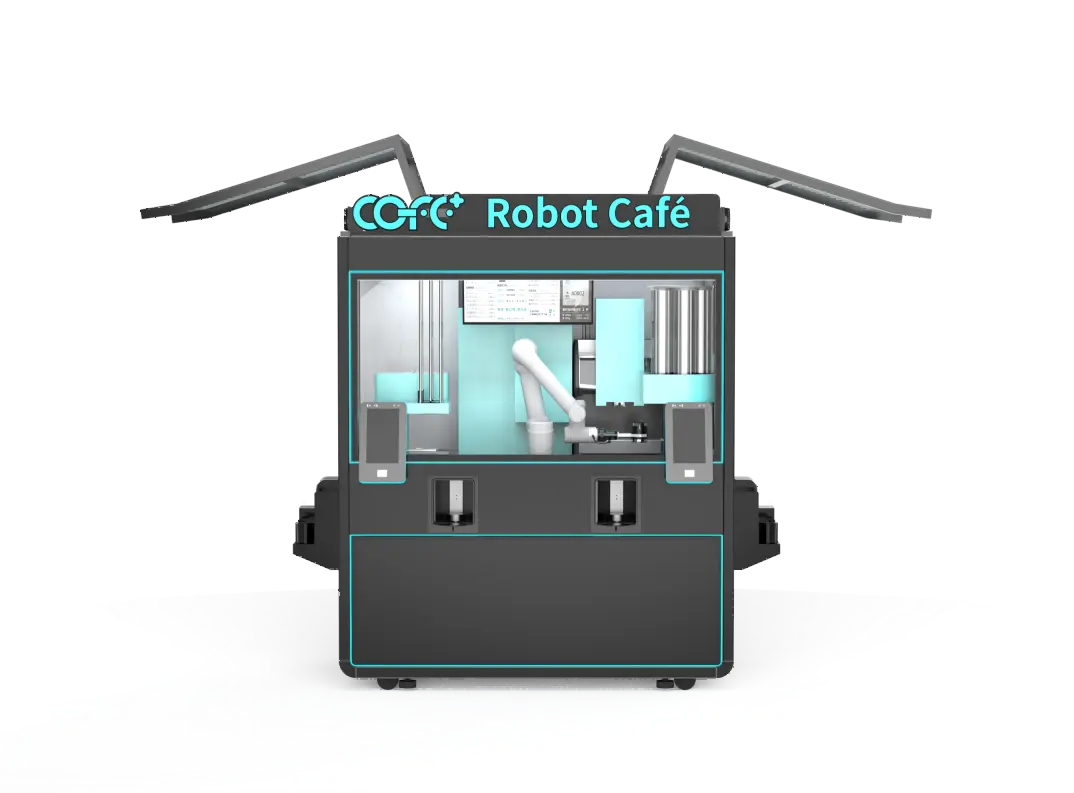
Start with the operating model. A COFE+ 7th generation indoor unit occupies 2.35 square meters, runs without a barista, and can serve around 1,000 cups per day. That means a landlord is not funding six staff positions, training, or shift coverage. The conversation shifts from “why a robot?” to “where does it fit?” which is a winnable question.
I have seen airport teams care less about latte art in the first meeting than about whether the unit can be moved during terminal renovation. The indoor model is mobile and does not need fixed plumbing in every configuration, but the buyer must confirm water, drainage, and power early. Put that on the first slide and the pitch stops feeling like a technology demo.
Robot Coffee Kiosk Sales Pitch Grounded in Throughput and Labor Cost Data
Buyers at a shopping center concession do not want a promise; they want a capacity number. The 7th generation machine delivers a cup in 43 to 60 seconds and is engineered for more than 500,000 cups over its design life. Present those two numbers side by side. Speed tells the queue story. Durability tells the capital planning story.
Labor cost is the sharper argument. A single unit replaces about six baristas and pushes per-cup production cost to roughly $0.30 to $0.70. A mall kiosk can run 24 hours without shift handoffs, and an airport can absorb early morning departures without scheduling extra staff. I frame this as an operating cost line, not a novelty metric. The buyer’s own P&L does the persuading.
The pitch should then show which format matches the site, because quoting an outdoor machine for a concourse or an indoor counter for a parking plaza creates confusion. I keep the following comparison on one page.
| Formato | Huella | Strength | Mall or Airport Fit |
|---|
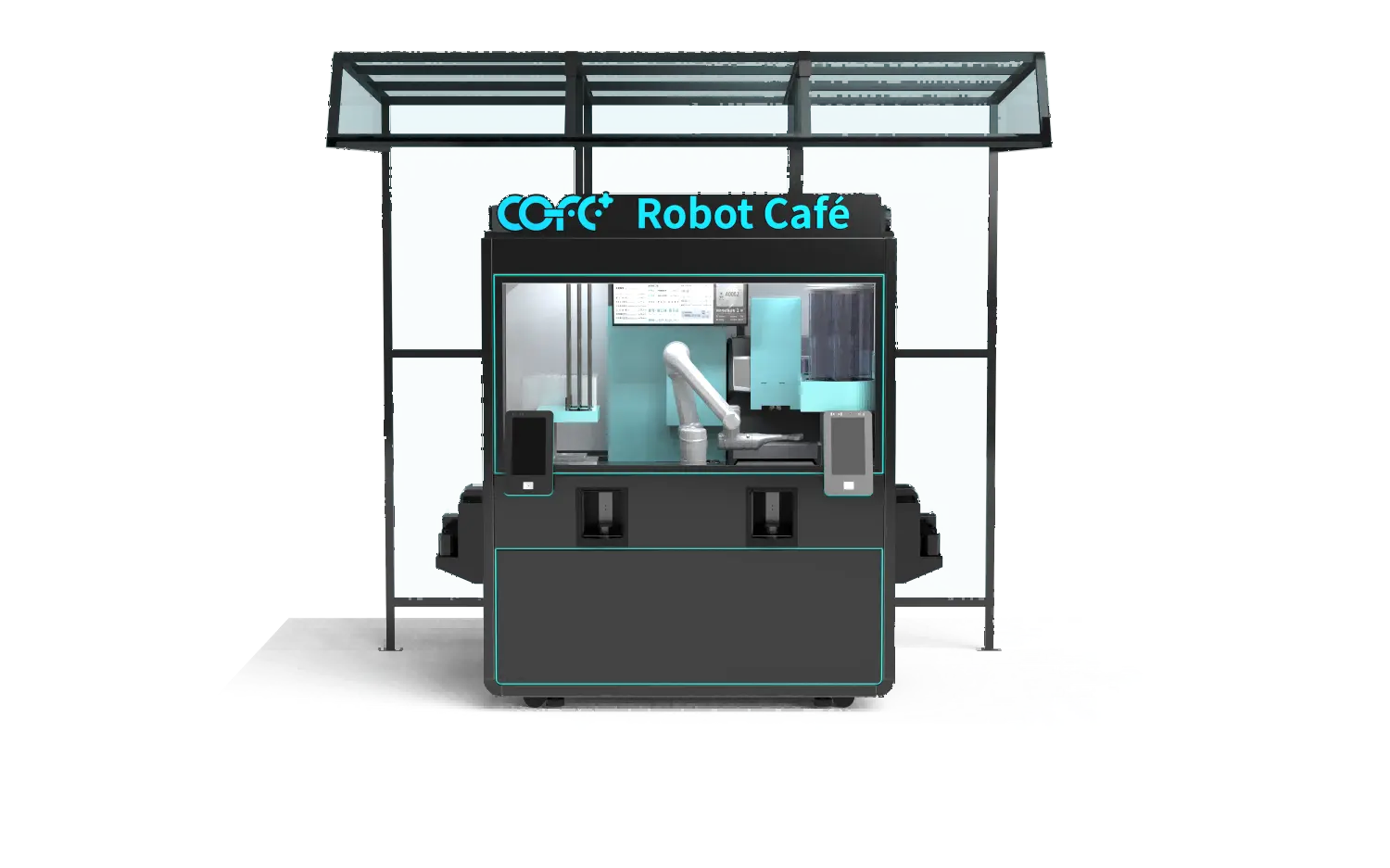
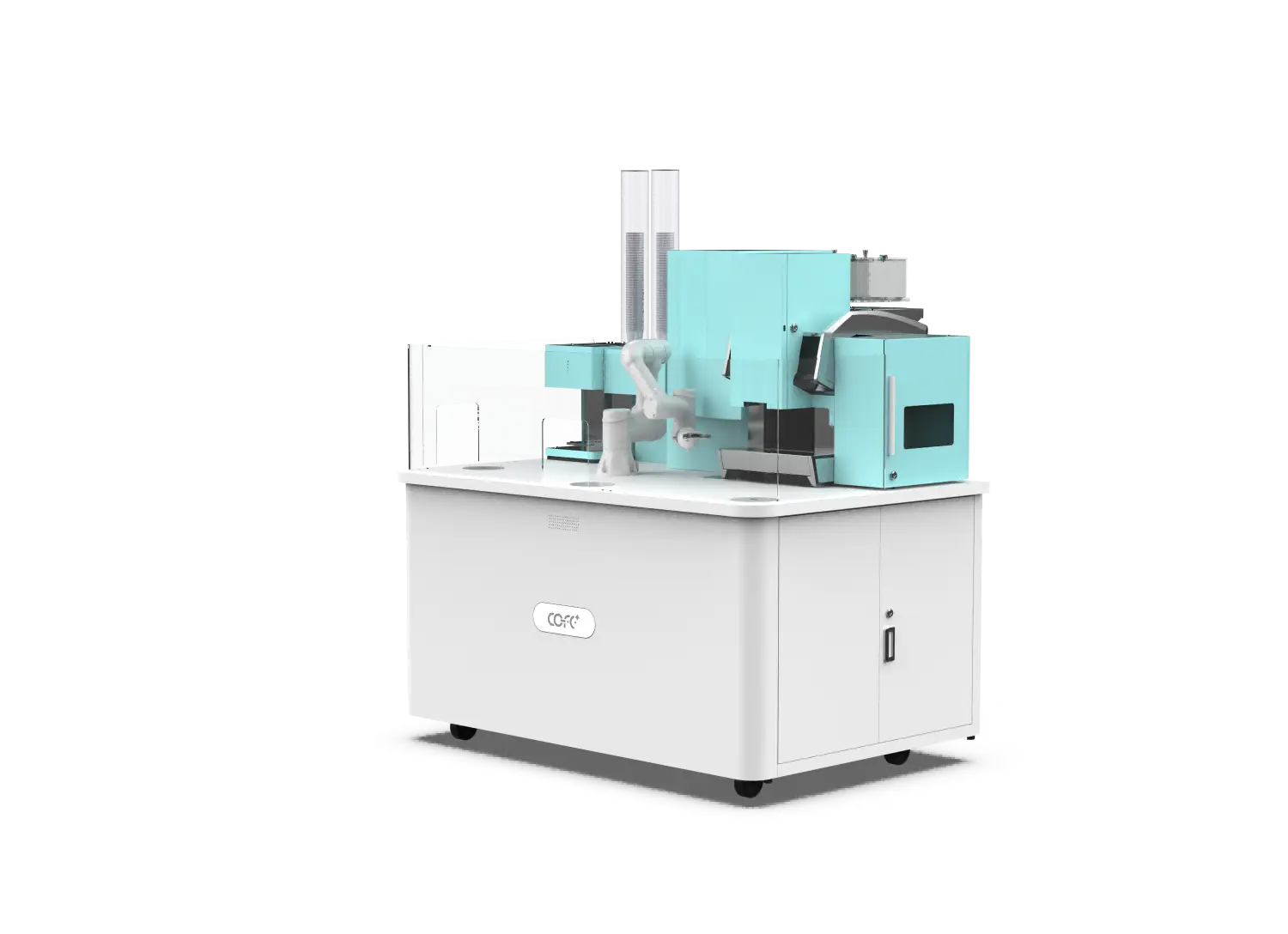
| Quiosco interior | 2.35 m² | 43 to 60 second cup, no staff | Concourse, atrium, or terminal with utility access |
| Quiosco exterior | Compact, IP54 rated | Operación en cualquier clima de -20°C a 45°C | Curbside, outdoor plaza, or parking exposure |
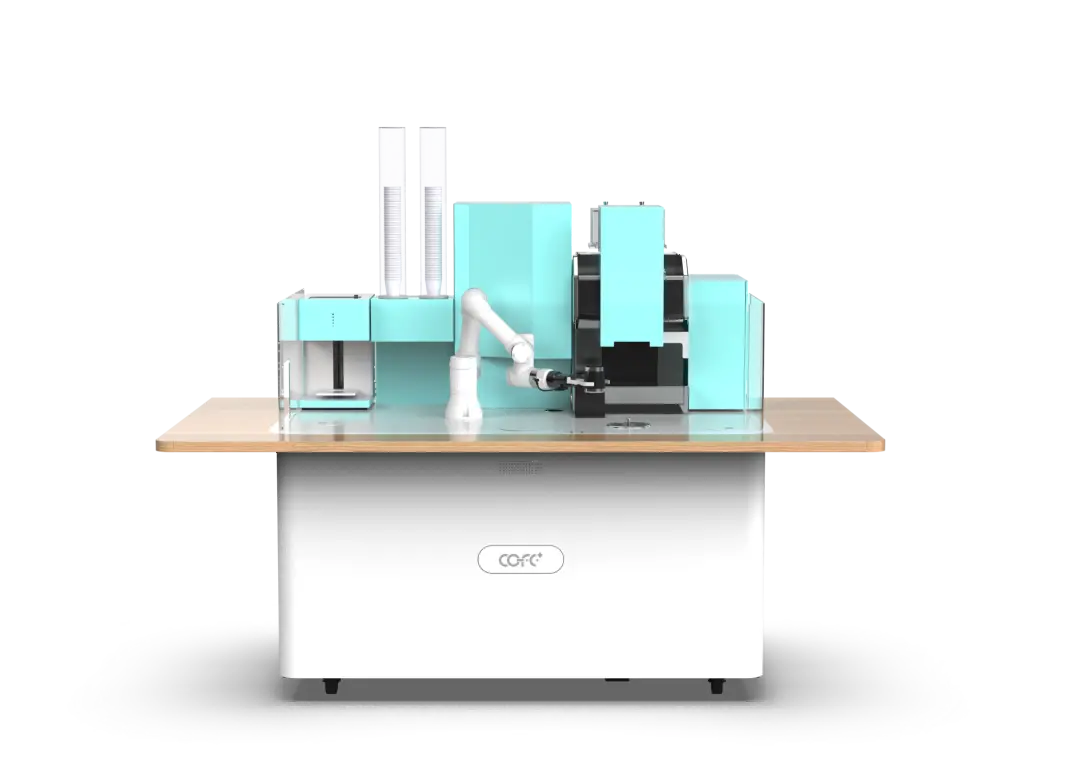
| Barra de Café Robot | Aproximadamente 2 m² plegado | Four-seat open bar | Lounge or premium waiting area |
| Robot contador de café | Aproximadamente 2 m² | Counter-integrated coffee theater | VIP reception or club space |
The Foot Traffic Conversion Case for Unmanned Coffee in High-Dwell Locations
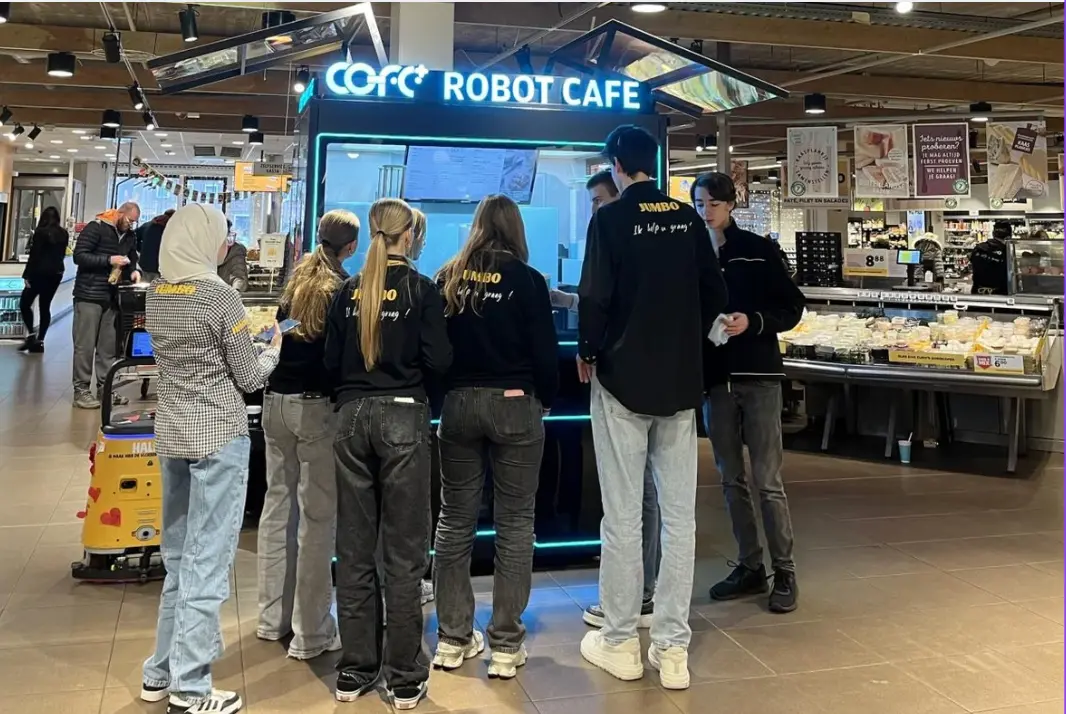
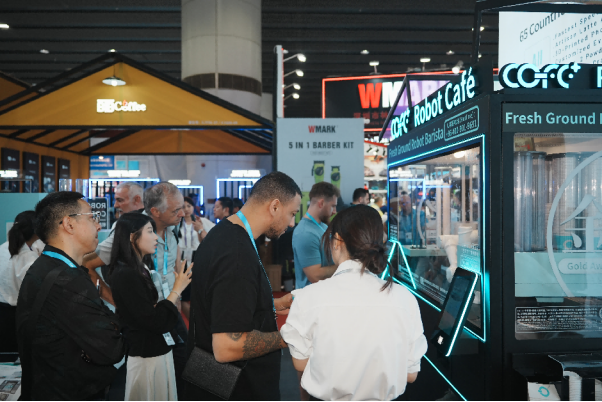
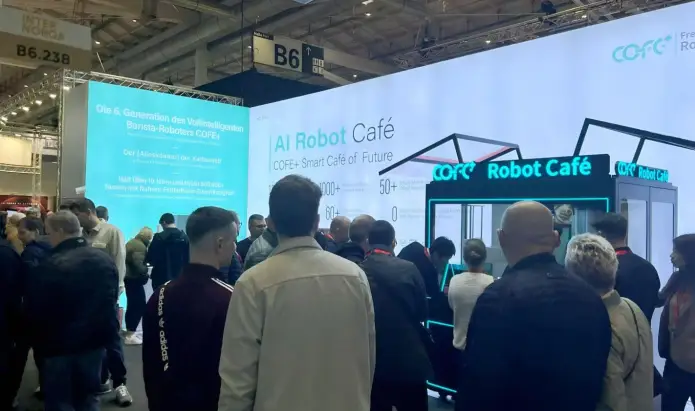
Shopping centers and airports already own the traffic. What they need is a reason for that traffic to stop instead of walking past. The kiosk creates a visible production moment: a robotic arm grinds, extracts, and prints a photo or logo on the foam. That converts dwell time into a queue and gives passengers a reason to pause in front of the unit. The sale is not coffee alone; it is incremental spending in an area the landlord previously counted as circulation space.
Menu depth makes the conversion argument easier. A machine with 300-plus drinks and 197 country-inspired recipes can match a wider customer mix than a standard vending machine. An airport with international passengers needs plant-based milk and cold drinks; a shopping center near offices needs fast cappuccinos at 8 a.m. The pitch should walk the buyer through a sample menu board for their own traffic, not a generic product catalog.
Visual drinks do more in these spaces than in a cafe. A 3D printed logo latte at an airport becomes a social sharing device, and passengers advertise the location without media spend. I tell commercial teams to bring a short clip of the robotic arm finishing a cup. It answers the experience question faster than a slide deck.
If your mall or airport program involves fixed utility access, food safety review, or a 24-hour operation requirement, confirm the water, drainage, and certification position before finalizing the site plan. Send the floor area, power point, and expected daily passenger count to sales@hi-dolphin.com, and we will confirm which format fits without a long back-and-forth.
Certification and Site Readiness Questions in a Robot Coffee Kiosk Sales Pitch
Shopping center and airport buyers ask two questions before they ask about price: is the equipment compliant, and will it pass a facility review? The 7th generation platform carries FDA, CE, UKCA, KC, and SASO marks, and the outdoor unit is IP54 rated for dust and water resistance. Hi-Dolphin has passed food safety evaluations and holds more than 50 certifications across 18 developed countries. That credential layer belongs in the middle of the pitch, after the operating model and before the commercial terms.
Site readiness is where a sales pitch can lose credibility. The indoor kiosk is compact and mobile, but it still needs power, water, drainage, and a stable internet connection. An outdoor airport curb position must also manage temperature swings. The outdoor format is designed for minus 20 to 45 degrees Celsius and includes an anti-condensation system, a sealed waste system, and high-temperature sterilization at 85 degrees Celsius or above. Buyers remember a seller who names these constraints early.
Prepare a one-page site checklist for the buyer: footprint, floor load, power rating, water supply, drain point, and network uplink. This turns the conversation toward implementation and away from vague enthusiasm. I usually ask the facility team to mark utility locations on a plan before the next call. It is a small request that separates serious vendors from demo-only suppliers.
A Robot Coffee Kiosk Sales Pitch That Ends With a Specific Pilot Request
Mall and airport teams hesitate on a full rollout because a kiosk still feels like fixed infrastructure. A smaller pilot removes that pressure. Choose one high-traffic zone, run the unit for 60 to 90 days, and measure queue time, daily cups, and labor saved against the facility’s own targets.
The first step is specific. Send the floor plan, utility locations, and expected peak-hour traffic to sales@hi-dolphin.com, or call +86 131 6630 1290. We will return a model recommendation, a footprint check, and a pilot outline for your site. No broad demo request, just the information needed to decide whether a robot coffee kiosk earns its place in your property.
Common Questions About Robot Coffee Kiosk Sales Pitches
How long should a shopping center pitch actually take?
Twenty minutes is enough if the first five show the unit, the next ten cover operating cost, and the final five end with a site checklist. The mistake is leading with sixty slides on AI architecture. Buyers leave with no clear next step. Keep the meeting focused on footprint, peak-hour throughput, and payback, and send the technical file later. Ask for the lease terms at the end.
Do airports ask for different approvals than shopping centers?
Most people assume a robot kiosk is treated like a coffee vending machine. Airports treat it closer to a concession installation. The buyer will review food safety certification, fire and electrical clearances, and screen the unit’s materials. Shopping centers often focus on lease area, utility points, and visual fit. The pitch should prepare both bundles, but lead with the airport folder when meeting terminal operators.
Which revenue model gets a landlord to say yes?
It depends on who takes the operating risk. If the landlord wants no staffing responsibility, a revenue share with a floor rent works. If the operator wants full control, a fixed lease plus a utility fee is simpler. I would keep the first proposal to two options and attach a simple payout table. That lets a property team compare the robot kiosk against a vacancy or an underperforming tenant instead of debating abstract technology value.
Can one kiosk really handle a morning airport rush?
In high-traffic terminals, I watch queue behavior before quoting a single number. A 43 to 60 second cup time is fast, but cup speed only matters if the ordering flow and pickup zone are clear. For a peak-hour build, position the kiosk near a straight queue path, keep the menu board tight, and let passengers tap and walk. If your site shows a sharp 30-minute spike, share those volumes and the terminal drawing, and we will confirm the right unit and layout before you commit.