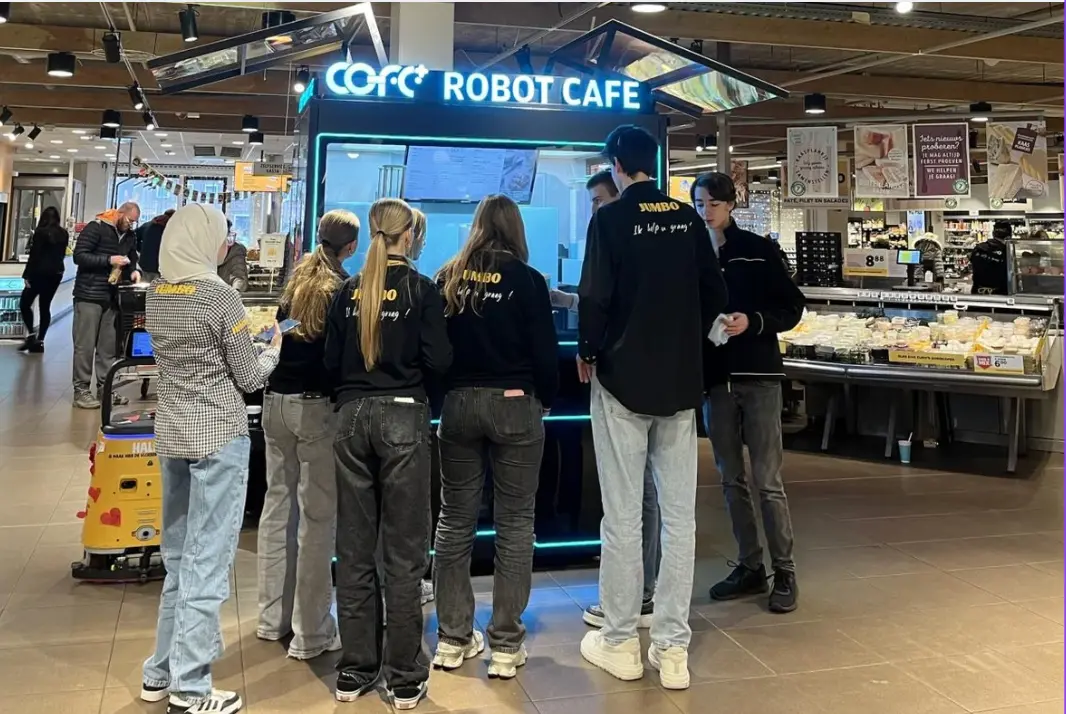
The Rise of Professional Robotic Café Technology: What COFE+ Is and Why It Matters
TL;DR — COFE+ is a fully automated robotic coffee kiosk that grinds fresh beans, brews espresso and lattes, creates latt……

Tourist information centers operate at the intersection of wayfinding, hospitality, and first impressions. Many run extended public-facing hours with small teams and limited food-service budgets. A conventional café often fails the space test: a counter, barista station, storage, and seating can quickly exceed the available lobby or annex area. At the same time, visitors arriving from early-morning transport or after lunch still expect a fast, safe, and familiar beverage option.
A robot coffee kiosk fits this operational gap. It serves espresso-based drinks, milk tea, chocolate, and iced options from a compact footprint while the information desk staff remain focused on maps, tickets, seasonal events, and accessibility support. The result is an additional visitor service without adding headcount or closing the information desk.
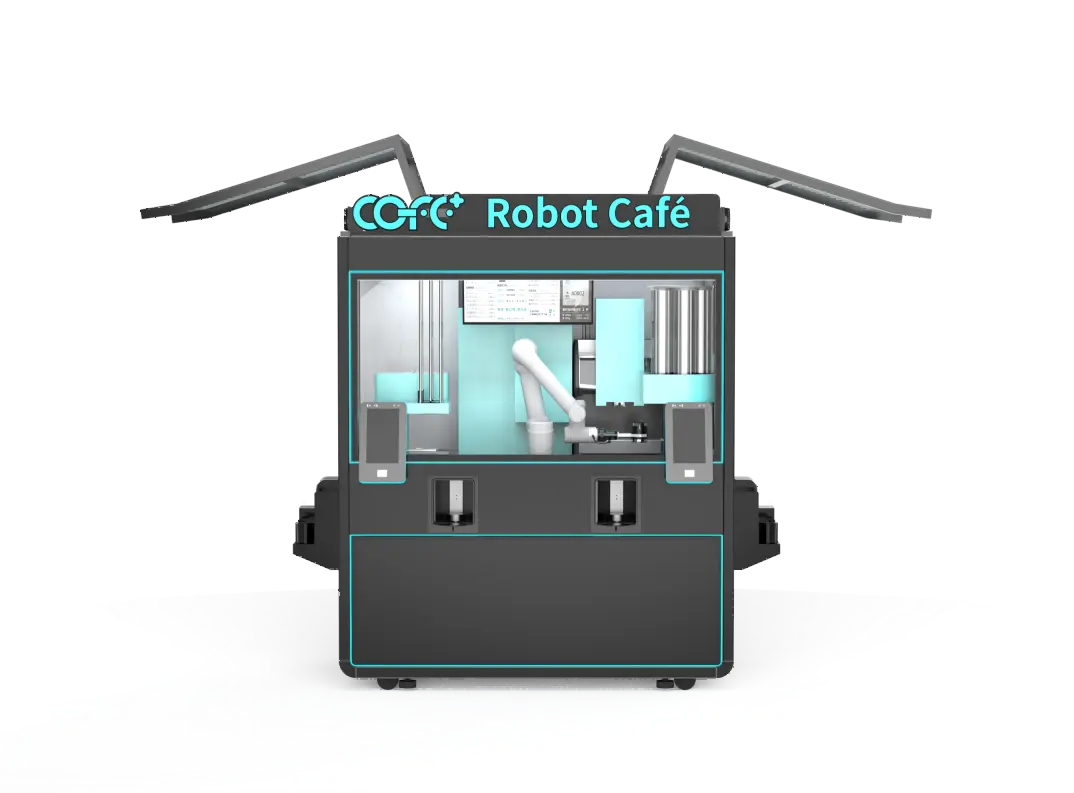
Indoor robotic coffee systems now go well beyond push-button instant coffee. The COFE+ 7th generation indoor kiosk, for example, uses a robotic arm to grind beans, extract espresso, steam milk, and finish drinks with printed foam art. The platform supports more than 300 drink recipes and 5,000-plus customization combinations drawn from coffee, milk tea, matcha, chocolate, and plant-based ingredients. That menu breadth matters in tourist information centers because visitors arrive with different hot-cold beverage expectations, milk preferences, and local flavor expectations.
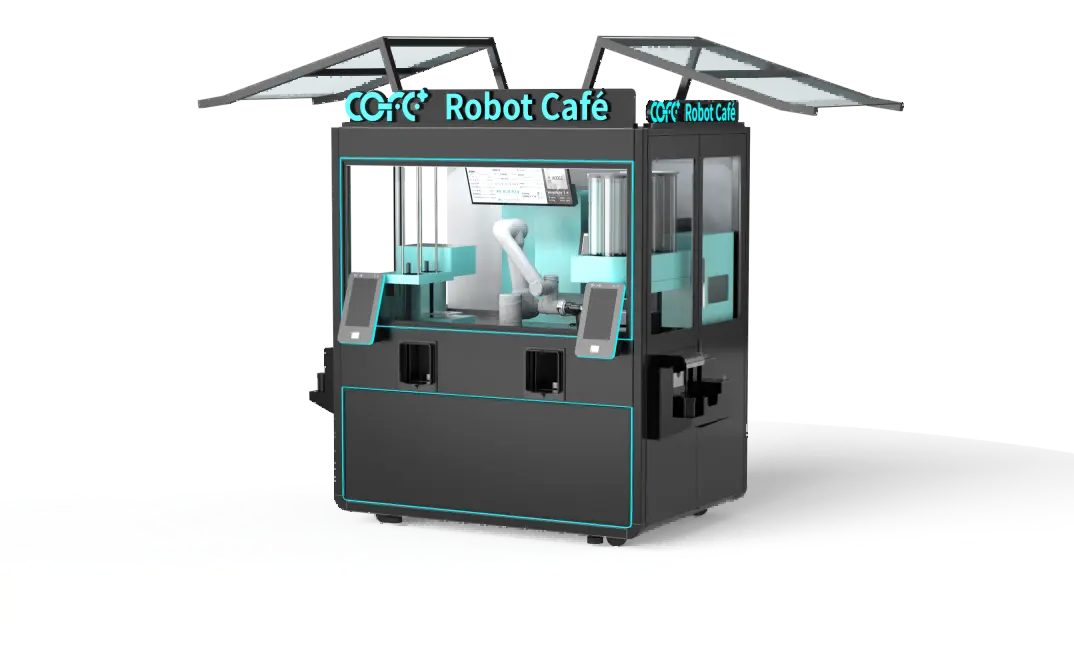
Service speed also supports queuing in visitor lobbies. The system is engineered to complete a cup in 43–60 seconds and can operate continuously, with manufacturer data indicating approximately 1,000 cups per day in high-throughput settings. For an information center, this means tourists do not have to choose between waiting for a map and waiting for a coffee.
A successful installation starts with the physical site. The 7th-generation indoor kiosk occupies approximately 2.35 m², but the working envelope should include space for approach, queue depth, screen interaction, and maintenance access. In a compact information center, wall-side or angled corner placement near the entry or sitting area generally works better than mid-lobby island placement because it preserves pedestrian routes.
Power should be supplied through a dedicated circuit sized to the kiosk electrical load. Water supply and drainage must be confirmed early: most indoor kiosks require a potable water line, a filtered supply, and a drainage connection for rinse and cleaning cycles. Internet access should be stable enough for cashless payment approval, remote monitoring, and menu updates; a 4G/5G failover is useful when the visitor center relies on public Wi-Fi. Check landlord or municipal authority rules for backflow prevention and floor load.
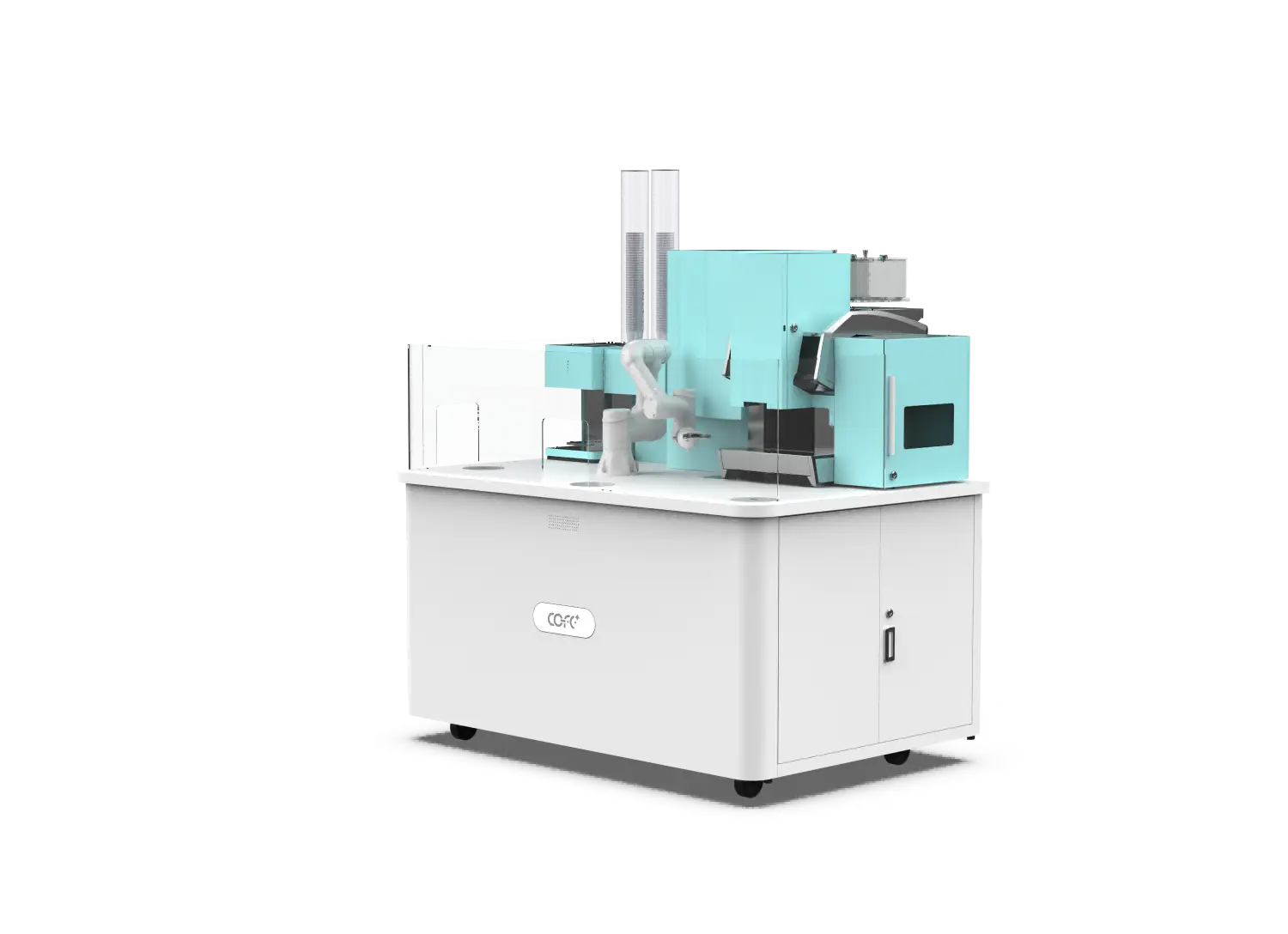
If the lobby already has a staffed reception counter, a built-in robot coffee counter can be integrated into that furniture line instead of occupying a separate island or wall position.
For operators comparing an enclosed kiosk with lighter counter formats, robot coffee kiosk indoor covers the 7th-generation footprint, menu capacity, and utility planning for indoor public spaces.
Any food and beverage installation inside a public information center must meet local food-hygiene regulations. In European Union jurisdictions, this typically means operating under the principles of Regulation (EC) No 852/2004, which requires hazard-based controls, cleanable surfaces, potable water, and effective cleaning procedures [1]. Similarly, the U.S. FDA Food Code provides a widely referenced benchmark for food-contact surface cleaning and hot-water sanitization [2].
The most practical purchasing question is whether the machine’s food-contact materials and cleaning cycle support that compliance. Look for equipment with anti-microbial stainless-steel interiors, enclosed waste handling, automatic rinsing, and high-temperature cleaning. For example, the COFE+ indoor system performs automatic sterilization at 85°C or above, which aligns with hot-water sanitization approaches recognized in the FDA Food Code [2]. Electrical safety should be verified against IEC 60335-1 for the machine class and local installation requirements [3]. For food safety management, ISO 22000 provides a framework that many operators and certification bodies use [4].
Tourist information centers serve a changing audience, so the menu should be configured rather than set once. Digital menus can switch among English, local, and major visitor languages, with large icons for travellers who may not read the local script. Operators can emphasize familiar formats such as latte, cappuccino, mocha, iced latte, and plant-based milk options, while leaving room for one or two local signatures to make the service feel destination-specific.
Pricing should be transparent before payment. Show the total at selection, list allergen and milk defaults, and provide a contactless-only path with card, mobile wallet, and QR options. The goal is not a full café menu; it is fast, friction-free ordering for visitors who already have a destination and schedule.
For a broader look at deployment formats in visitor-facing spaces, scenarios covers indoor kiosks, coffee bars, counters, and outdoor applications for tourism, retail, and public venues.
Staffing is minimal, but not zero. The kiosk removes the barista function, yet the center should still assign one responsible person for daily checks: ingredient levels, cup stock, drip tray, and general cleanliness. Remote monitoring should surface low-stock alerts, temperature exceptions, payment faults, and module errors before they cause downtime.
In high-season periods, restocking should be planned against peak visitor patterns rather than fixed calendar days. If the center expects bus traffic at 10:00 and 15:00, schedule checks after the morning rush or before the afternoon group arrivals. This protects service continuity without hiring additional food-service staff.
Buyers should evaluate the full operating picture, not the purchase price alone. A structured request for quotation should cover:
| RFQ item | What to request |
|---|---|
| Footprint and clearance | Width, depth, height, service-door clearance, and minimum aisle space |
| Utility loads | Voltage, current, water pressure, drainage grade, and connectivity requirement |
| Menu capacity | Drink types, customization depth, and language switching |
| Hygiene system | Automatic cleaning cycle, waste handling, and food-contact material standard |
| Remote operations | Monitoring dashboard, alert types, and over-the-air menu updates |
| Certifications | Electrical, food-contact, and country-specific approvals |
| Support | Preventive service cadence, spare-part lead time, and local technician access |
Request a site-specific utility list from the supplier before the first site visit. Send the lobby drawings and a few photos to confirm placement and access.
If your center is preparing a request for proposal, send the site plan, utility availability, and estimated foot traffic to sales@hi-dolphin.com. The team can return a quick indoor-kiosk fit review and specification sheet for the tourist information center format.
When procurement teams move from shortlist to commercial terms, benefits covers the operational and economic case for a robotic coffee system in low-staff public venues.
A tourist information center pilot should be designed to answer three questions in 30 to 60 days:
Pilot goals should include average cups per day, transaction time, restock frequency, and visitor feedback. These data create the business case for a permanent installation or additional units.
Email: sales@hi-dolphin.com
Tel / WhatsApp: +86 131 6630 1290
Ask for: indoor kiosk specification sheet, tourist information center pilot checklist, and a utility-preparation summary.
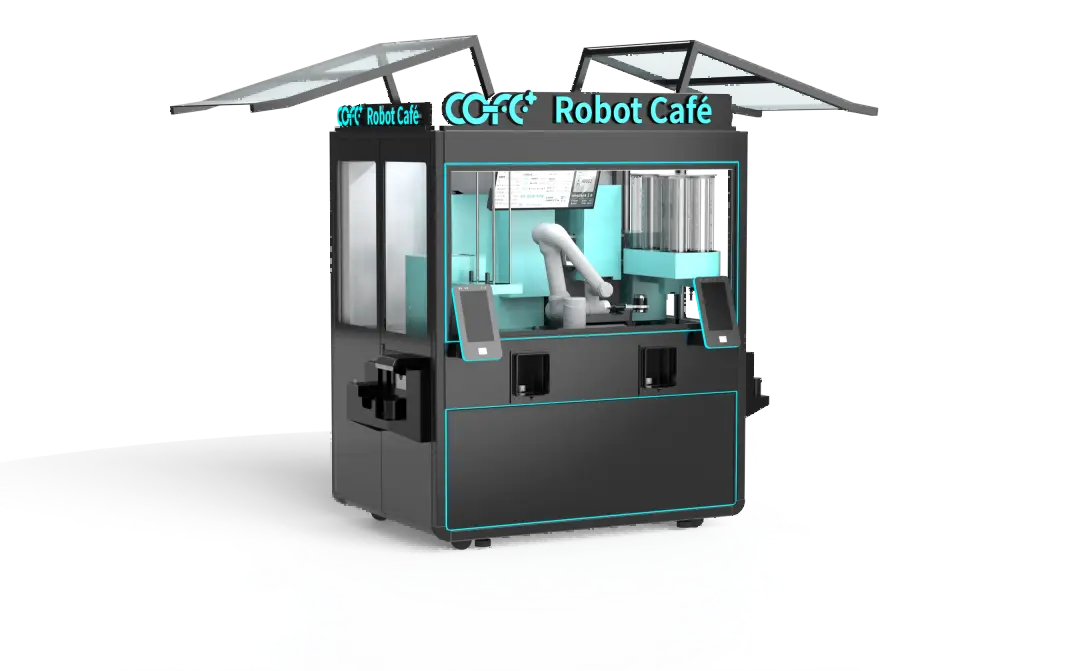
No additional barista or cashier is required. The system handles grinding, extraction, milk foaming, and serving automatically. The information center should still assign one person to perform a daily cleaning and restock check.
The indoor COFE+ kiosk occupies about 2.35 m². Include additional clearance for user approach, queue depth, screen interaction, and maintenance access. A corner or wall-side position usually conserves lobby space.
Yes. The digital interface supports multiple languages and allows operators to adjust drink types, milk options, sweetness, and seasonal items. Menus can be updated remotely without closing the kiosk.
Installation depends on utility readiness. Once power, water, drainage, and internet are available, the kiosk can often be positioned and commissioned within a few days. Final timing is influenced by local permits, landlord approvals, and site access.
Confirm that the kiosk holds the relevant electrical and food-contact certifications for your market, such as CE or UKCA where applicable, and regional approvals such as KC or SASO where required. Request documentation for the cleaning system, food-contact materials, and remote-monitoring platform [2][3][4].
Yes, the system is designed for continuous unattended operation. Daily restocking or cleaning pauses can be scheduled during low-traffic periods, and remote alerts help operators intervene before a fault becomes a long service interruption.
[1] European Commission, “Regulation (EC) No 852/2004 of the European Parliament and of the Council on the hygiene of foodstuffs,” Official Journal of the European Union, 2004. [Online]. Available: https://eur-lex.europa.eu/legal-content/EN/TXT/?uri=CELEX:32004R0852
[2] U.S. Food and Drug Administration, Food Code 2022, U.S. Department of Health and Human Services, 2022. [Online]. Available: https://www.fda.gov/food/fda-food-code/food-code-2022
[3] International Electrotechnical Commission, IEC 60335-1:2020, Household and similar electrical appliances – Safety – Part 1: General requirements, 2020.
[4] International Organization for Standardization, ISO 22000:2018, Food safety management systems — Requirements for any organization in the food chain, 2018.
TL;DR — COFE+ is a fully automated robotic coffee kiosk that grinds fresh beans, brews espresso and lattes, creates latt……
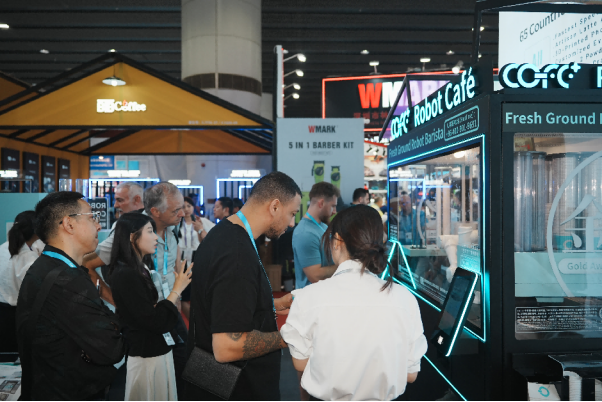
7th-Genertion Smart Robot Coffee Kiosk Arrives at the Belt and Road Core Hub, Ushering in a New Service Era Along t……
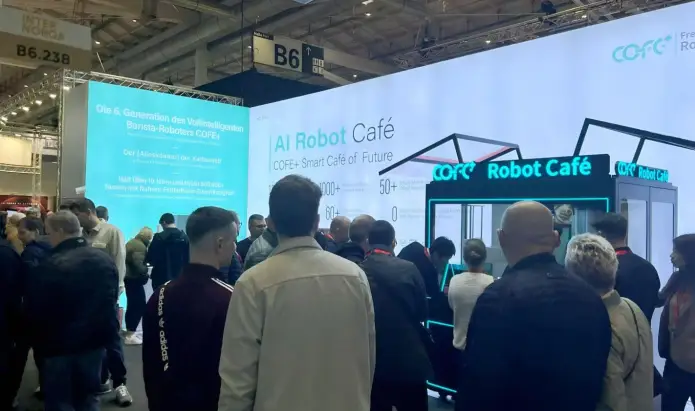
CHICAGO, May 12, 2026 (GLOBE NEWSWIRE) – Shanghai Hi-Dolphin Robot Technology today announced the U.S. debut of its 7th‑……