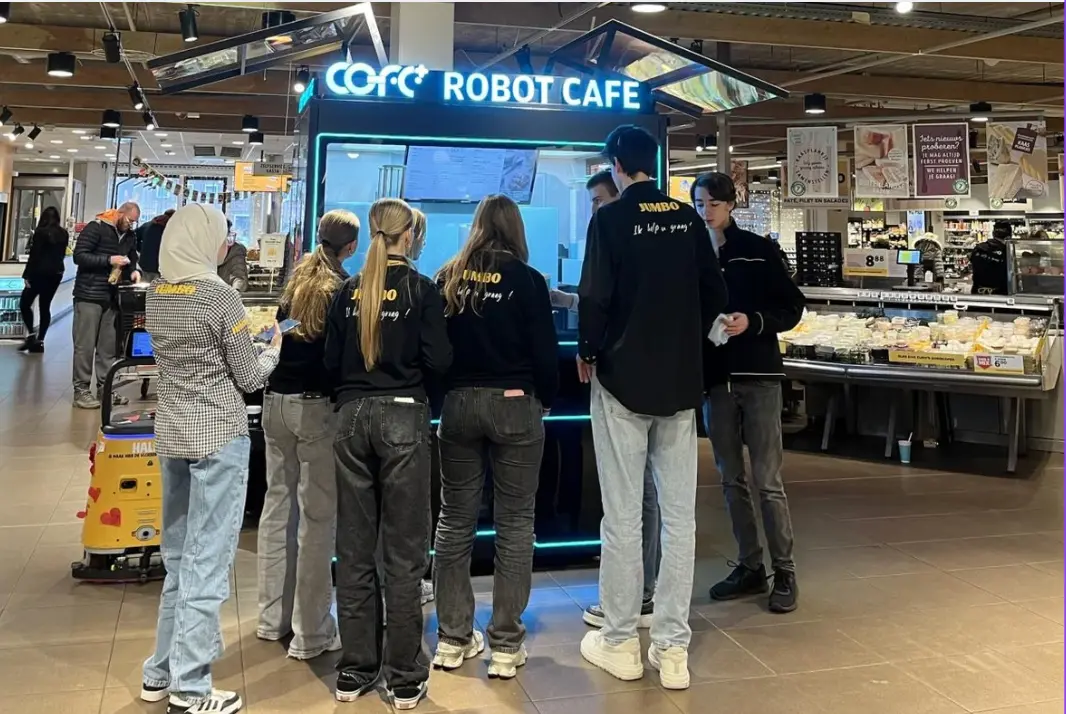
The Rise of Professional Robotic Café Technology: What COFE+ Is and Why It Matters
TL;DR — COFE+ is a fully automated robotic coffee kiosk that grinds fresh beans, brews espresso and lattes, creates latt……

Ferry terminals and seaports run on departure boards, not lunch breaks. A coffee cart staffed for an 11:00 sailing clears out by 11:20, and the next rush does not arrive until the following departure cycle. A robot coffee kiosk changes the staffing math because it stays active across the full terminal schedule, serving passengers, crew, and port staff in the gaps when foot traffic would never justify a manned counter. For terminal operators, the practical evaluation sits in placement, utilities, marine environment, certification, and wave-loaded throughput.
Passenger traffic at a ferry terminal is not a standard retail curve. It arrives in bands tied to check-in windows and boarding calls, then drops sharply after the gangway closes. In a regional terminal that pattern may repeat every 40 minutes for two hours, then go quiet until the next cluster. A staffed counter has to staff for the peaks, which means paying baristas to stand through the troughs. That problem disappears with an unattended robot coffee kiosk. The COFE+ seventh generation system serves a cup in 43 to 60 seconds and runs up to about 1,000 cups per day, so a short boarding window becomes a throughput exercise instead of a labor-scheduling problem. Crew and port employees also buy outside passenger peaks, and the kiosk captures that scattered demand without adding shifts.
| Traffic condition | Staffed counter | Robot coffee kiosk |
|---|---|---|
| Sailing delayed and passengers wait | Staff may have left or closed | Stays active through the delay |
| Early 04:00 departure | Barista not rostered | Serving without shift coverage |
| 15-minute boarding rush | Queue builds at the register | Cup service in 43 to 60 seconds |
| Afternoon lull | Fixed labor cost remains | Unattended operation continues |
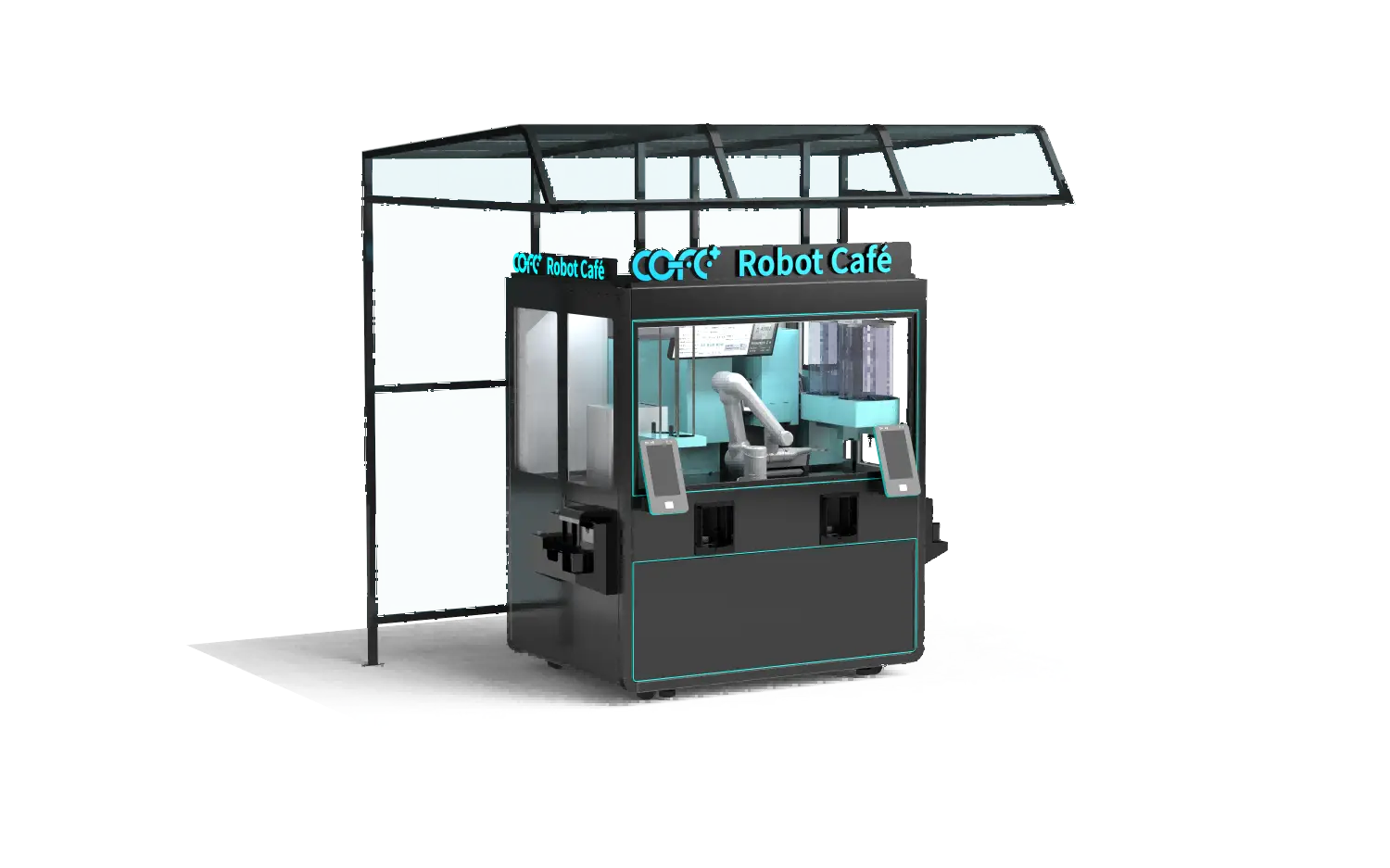
Terminal buildings and exposed quaysides are not the same environment. Inside a passenger waiting hall, a 2.35 m² indoor robot coffee kiosk fits near gate seating, escalators, or baggage lanes without cutting into circulation space. Outside on the approach road or quay side, the unit needs a different level of protection. The outdoor version is built for IP54 dust and water resistance, UV-resistant panels, an anti-condensation system, and operation from minus 20 to 45 degrees Celsius. That matters around salt air, fog, and wind-driven rain. The outdoor unit also seals the waste stream fully, a detail that becomes important when pest control and odor clauses are part of the port concession.
| Specification | Indoor robot coffee kiosk | Outdoor robot coffee kiosk |
|---|---|---|
| Operating range | Climate-controlled interior | Minus 20 to 45 degrees Celsius |
| Enclosure | Standard indoor panels | IP54, UV resistant, anti-condensation |
| Waste handling | Enclosed collection | Fully sealed enclosed collection |
| Best position | Boarding lounge or gate seating | Covered walkway or quay side |
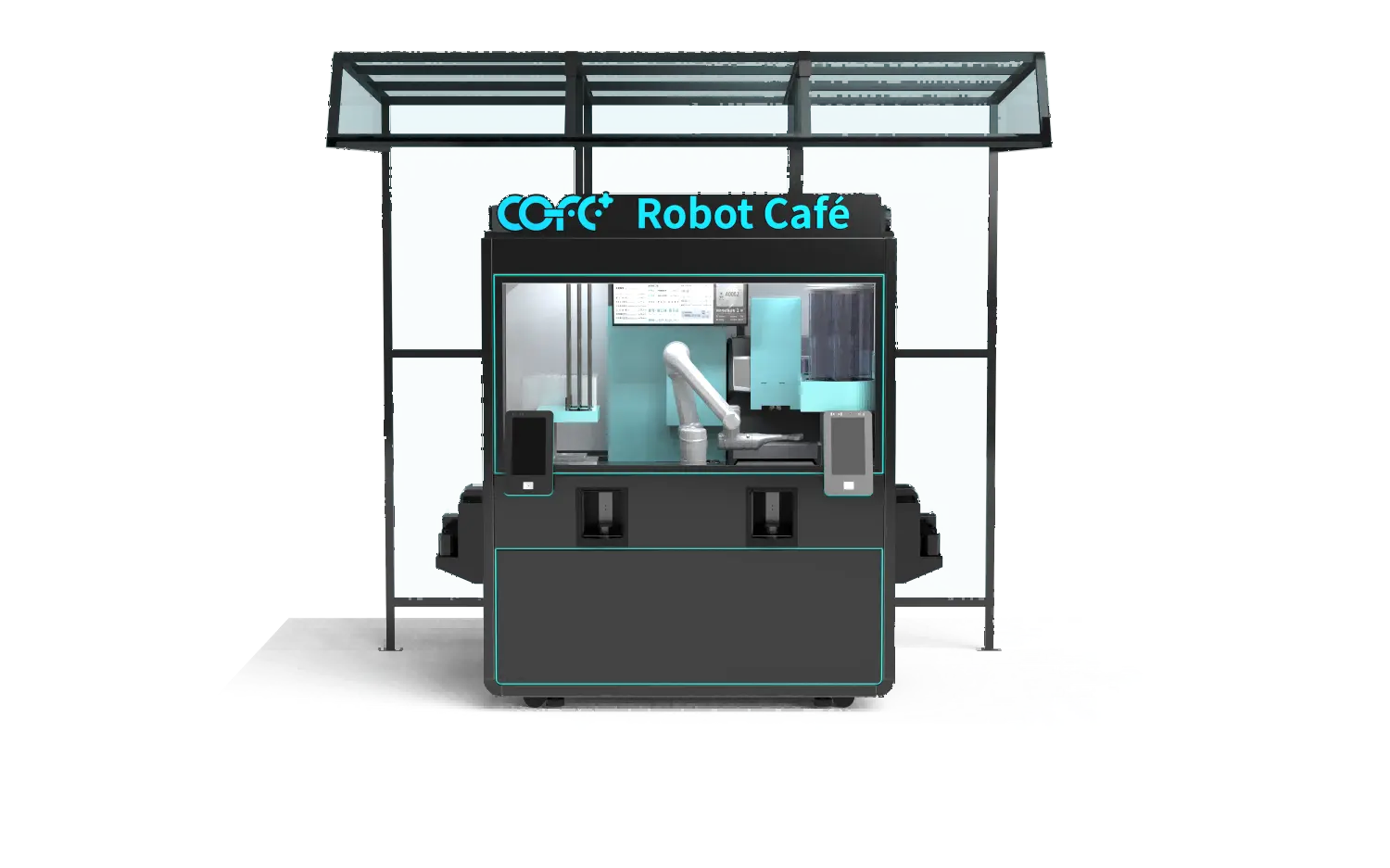
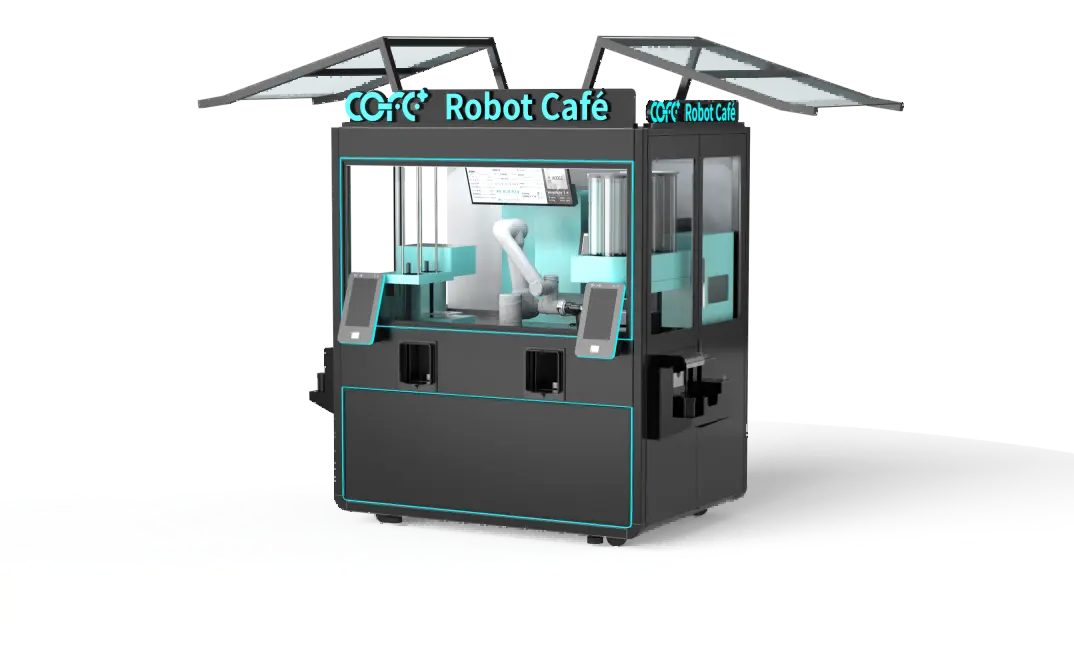
Contractors often start with the indoor unit beside the boarding lounge and add an outdoor unit later at the pickup drop-off. The site decision should follow passenger dwell location: if most people wait inside, the indoor wall-side placement is easier to service; if queues form along the covered walkway, the outdoor unit belongs there.
At a port, site readiness is usually the source of launch delays, not the machine itself. The kiosk is compatible with 110V and 220V supply, but many terminal electrical panels serve lighting, signage, and cargo equipment on schedules or circuits that are not suitable for continuous food equipment. During one quayside assessment I worked on, the intended connection was tied to a terminal lighting circuit that switched off at closing time, which would have taken the machine down at night. Moving the connection to a dedicated line removed the fallback before installation.
Request the exact electrical load from the supplier and compare it with the local distribution board. A potable water line can usually be routed from a nearby utility riser, but the route length and shut-off access should be confirmed before the kiosk position is fixed.
The machine includes enclosed waste collection and automatic cleaning, but the site still needs a path for service staff to empty liquids during replenishment. If a floor drain is not available, plan for scheduled emptying rather than assuming the line can be piped later.
Cashless payment and remote diagnostics require a stable internet link. A wired connection is preferred indoors; outdoor sites can use 4G backup where terminal Wi-Fi is restricted or partitioned.
Compliance reviews move faster when the model certification set is brought to the first meeting. The manufacturer carries FDA, CE, UKCA, KC, and SASO marks, has food-contact material documentation, and runs automatic high-temperature sterilization at 85 degrees Celsius or above. Port facility teams usually ask for those items, so having them in the submission avoids a later round of documentation.
At a ferry terminal, revenue depends on how many passengers from each sailing can be served before they board. A high cup price does not fix a ten-deep queue when the final boarding call is announced. Because the seventh generation machine completes a cup in 43 to 60 seconds and holds up to roughly 1,000 cups per day, the kiosk turns a short rush into volume instead of missed sales. The manufacturer lists a cost per cup of $0.30 to $0.70, with typical payback of 6 to 12 months at this kind of workload.
For planning purposes, operators should first calculate cups per peak hour, then work back to price. In many terminal sites I have modelled, the difference between a good location and a weak one is not margin but whether the queue forms in view of the boarding gate. Visibility shortens decision time and improves conversion, which is why placement beside the departure screen or seating is usually worth more than a central but hidden position.
If your peak demand window is shorter than 30 minutes, confirm the cup-to-cup cycle time and the queue holding area before you fix the lease. Send your sailing schedule and peak passenger count to sales@hi-dolphin.com to check the throughput calculation.
Most delays I see at port concessions come from sorting out utilities and approval requirements late. Shanghai Hi-Dolphin Robot Technology starts every ferry terminal deployment with a site survey before the kiosk footprint is locked. Send the terminal floor plan, peak passenger count per sailing, and two photos of the proposed location along with the nearest utility cabinet to sales@hi-dolphin.com, or call +86 131 6630 1290. The returned quote is based on the actual placement, not a generic package.
Marine air accelerates corrosion and condensation faster than inland air, but the outdoor kiosk is designed around that exposure. The enclosure carries IP54 protection, UV-resistant panels, and an anti-condensation system, while the stainless-steel interior is antimicrobial. The main maintenance consequence is the service schedule: external vents and seals should be checked more often at a saltwater port than at an inland mall.
Many concession managers assume an unmanned machine will be too slow when a ferry delay creates a sudden crowd. The actual constraint is not the robot arm but the queue layout and cup supply. Cycle time is 43 to 60 seconds per cup, so an hour-long delay can produce meaningful volume if passengers can see the machine from the waiting area and if cups, milk, and water are stocked. Pre-portioning supplies for delay scenarios should be part of the replenishment plan.
It depends on the concession structure. If the terminal operator already has a facilities contractor, that team can usually absorb the replenishment and waste emptying after a short training session. If the machine is run by an external concessionaire, the distributor or a local service partner handles those duties on a set route. The machine automates the coffee cleaning cycle and high-temperature sterilization, but someone still has to refill beans, milk, syrups, cups, and water.
In the ferry terminals and ports I have reviewed, international passenger handling means payment is a local integration question rather than a global standard. The kiosk can accept card networks and regional mobile payment schemes depending on the acquirer and software configuration. Confirm the available payment methods in the target country early, because certifying and switching acquirers after installation is more expensive than configuring it correctly before shipment. If your terminal handles frequent cross-border sailings, it is worth confirming the payment certificate set with sales@hi-dolphin.com before you finalize the machine configuration.
TL;DR — COFE+ is a fully automated robotic coffee kiosk that grinds fresh beans, brews espresso and lattes, creates latt……
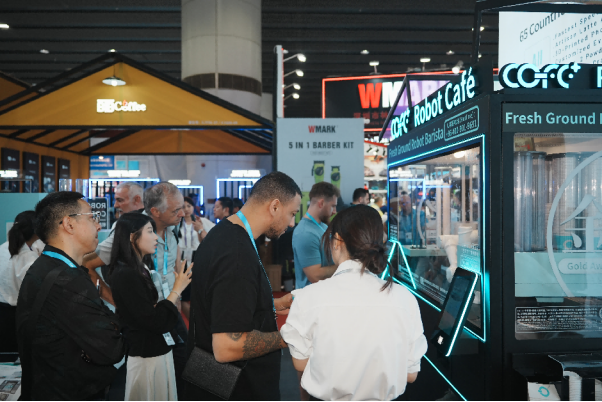
7th-Genertion Smart Robot Coffee Kiosk Arrives at the Belt and Road Core Hub, Ushering in a New Service Era Along t……
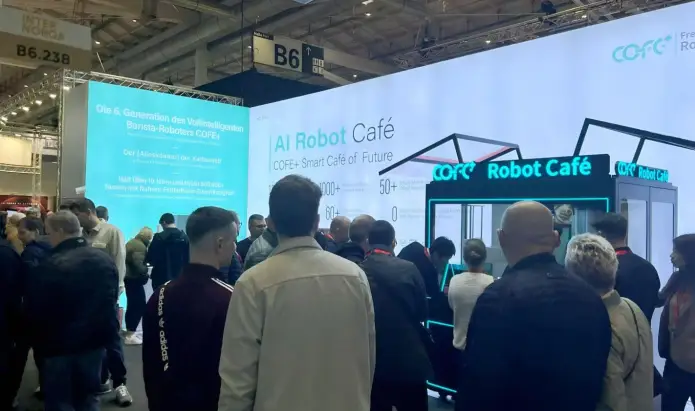
CHICAGO, May 12, 2026 (GLOBE NEWSWIRE) – Shanghai Hi-Dolphin Robot Technology today announced the U.S. debut of its 7th‑……