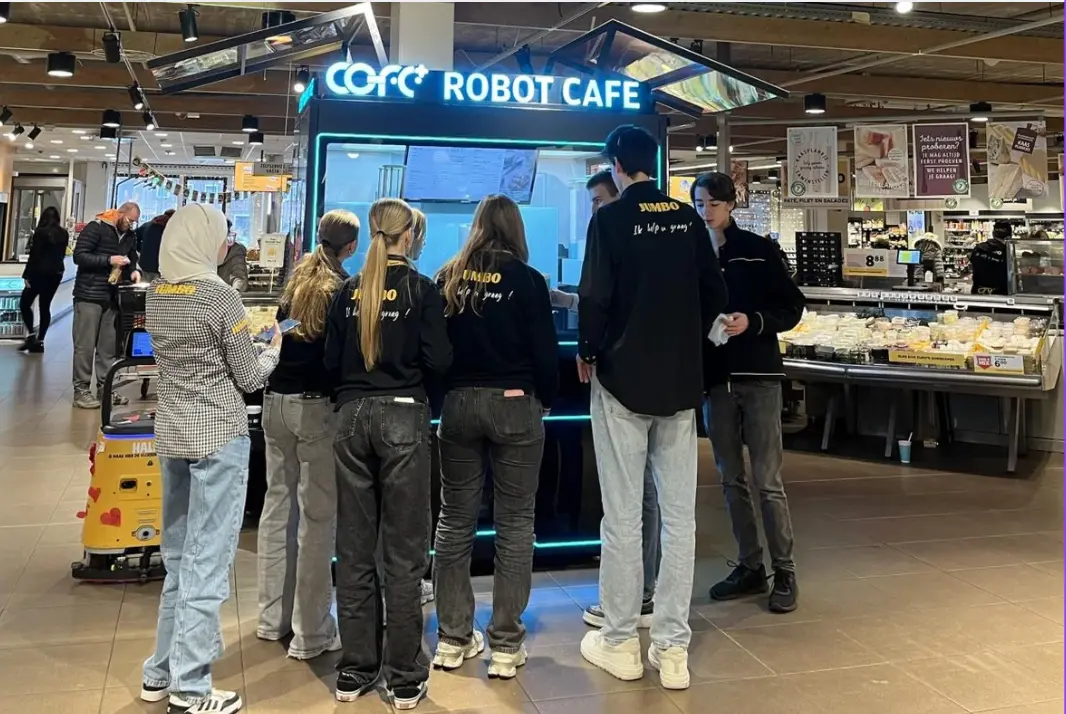
The Rise of Professional Robotic Café Technology: What COFE+ Is and Why It Matters
TL;DR — COFE+ is a fully automated robotic coffee kiosk that grinds fresh beans, brews espresso and lattes, creates latt……

An outdoor robot coffee kiosk is not an indoor machine moved outside. Public space operators need a unit that can hold coffee quality, payment security, and uptime through sun, rain, dust, humidity, and temperature swings, without a barista on site. The right buying decision starts by matching the kiosk’s protection, utility connections, remote management, and service access to the site rather than comparing cup capacity alone. This guide walks through the checks that prevent an attractive pilot from becoming a difficult daily operation.
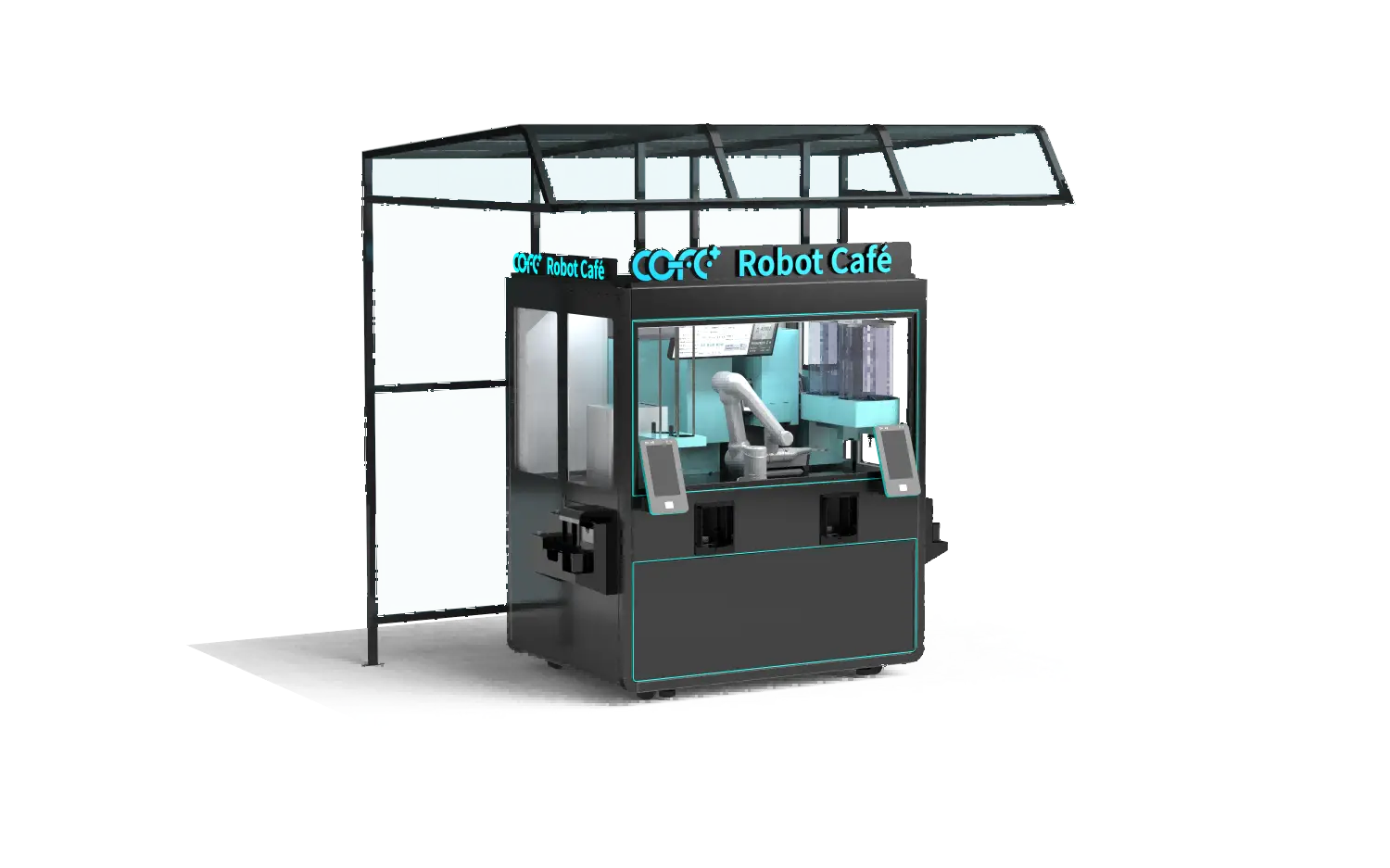
An outdoor robot coffee kiosk needs more than a weatherproof cover. The enclosure must protect the grinder, milk system, touchscreen, payment terminal, and waste area from direct sun, rain, dust, humidity, and temperature swings. In hot climates, the cooling and ventilation design has to keep milk and syrups within safe ranges. In freezing conditions, water lines, drains, and the boiler system need freeze protection rather than only a stronger cabinet.
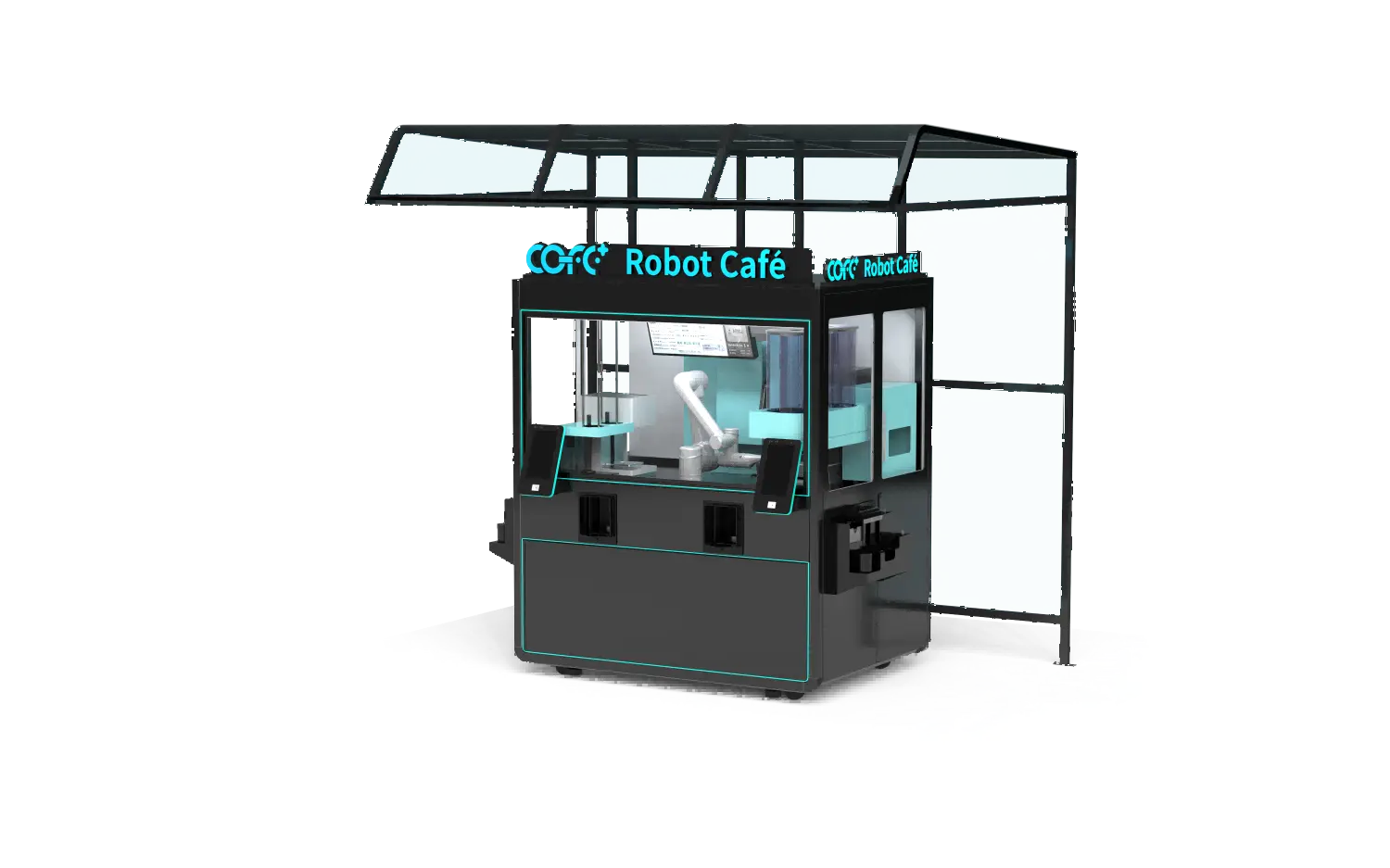
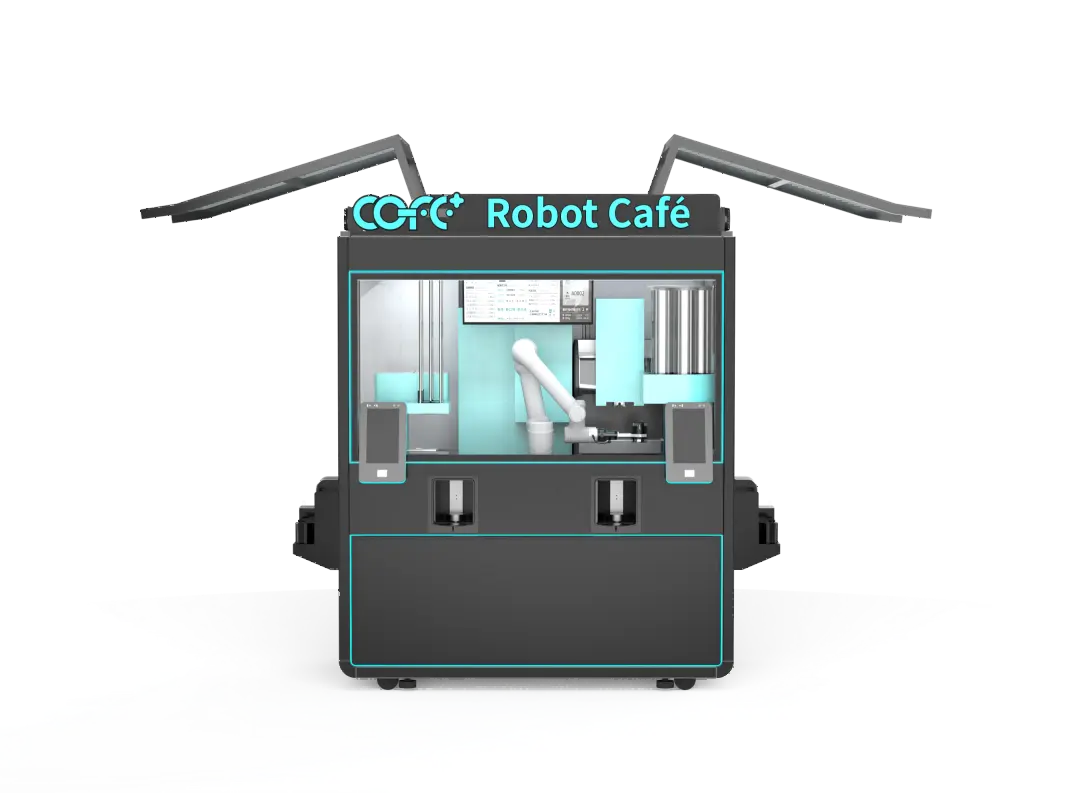
Hi-Dolphin’s COFE+ 7th Generation Outdoor Smart Coffee Robot Kiosk illustrates the relevant baseline: an operating range from -20°C to 45°C, IP54-rated dust and water resistance, UV-resistant surfaces, an anti-condensation system, and a fully enclosed waste area. These specifications support unattended operation, but they do not remove the need to review the specific site.
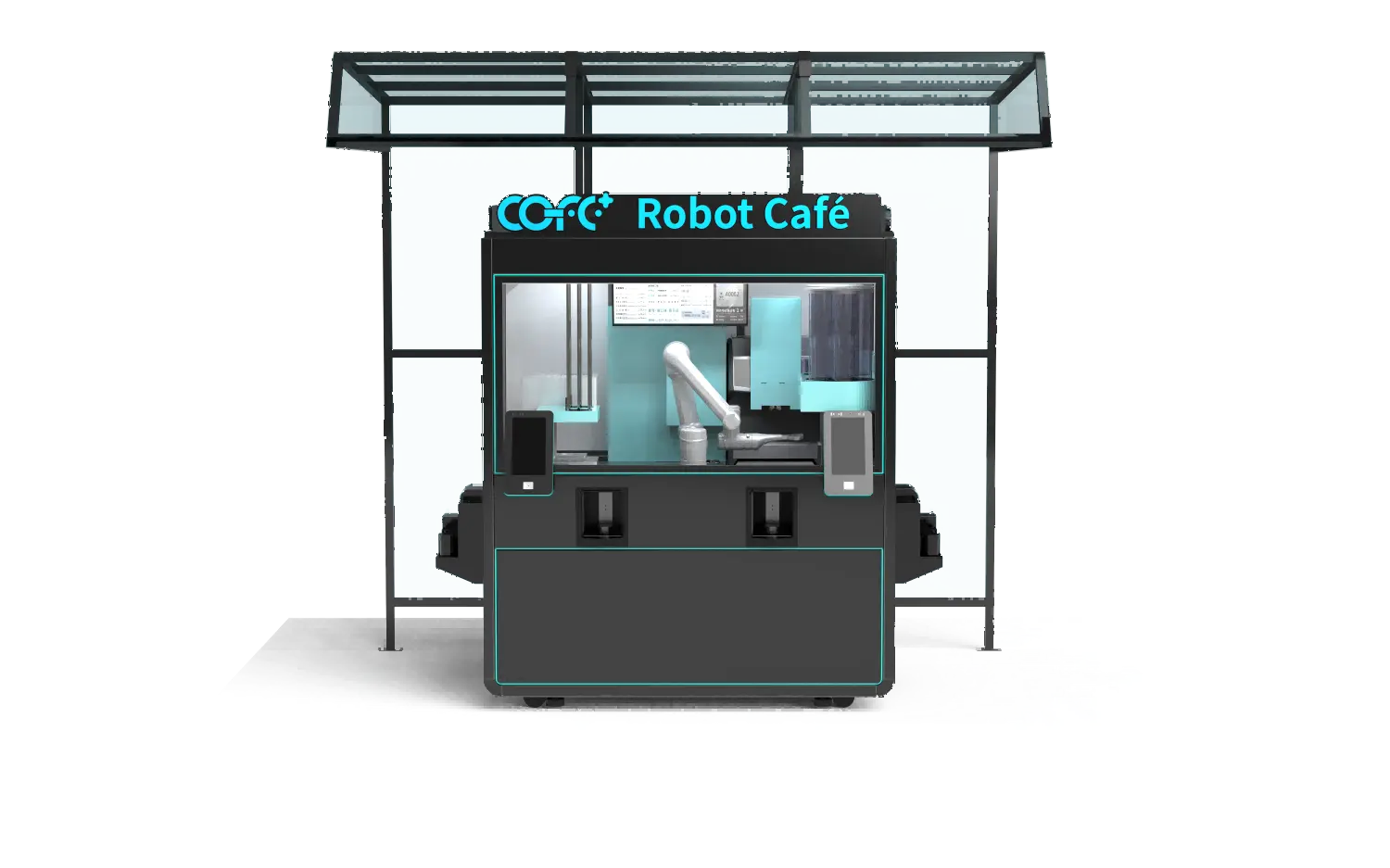
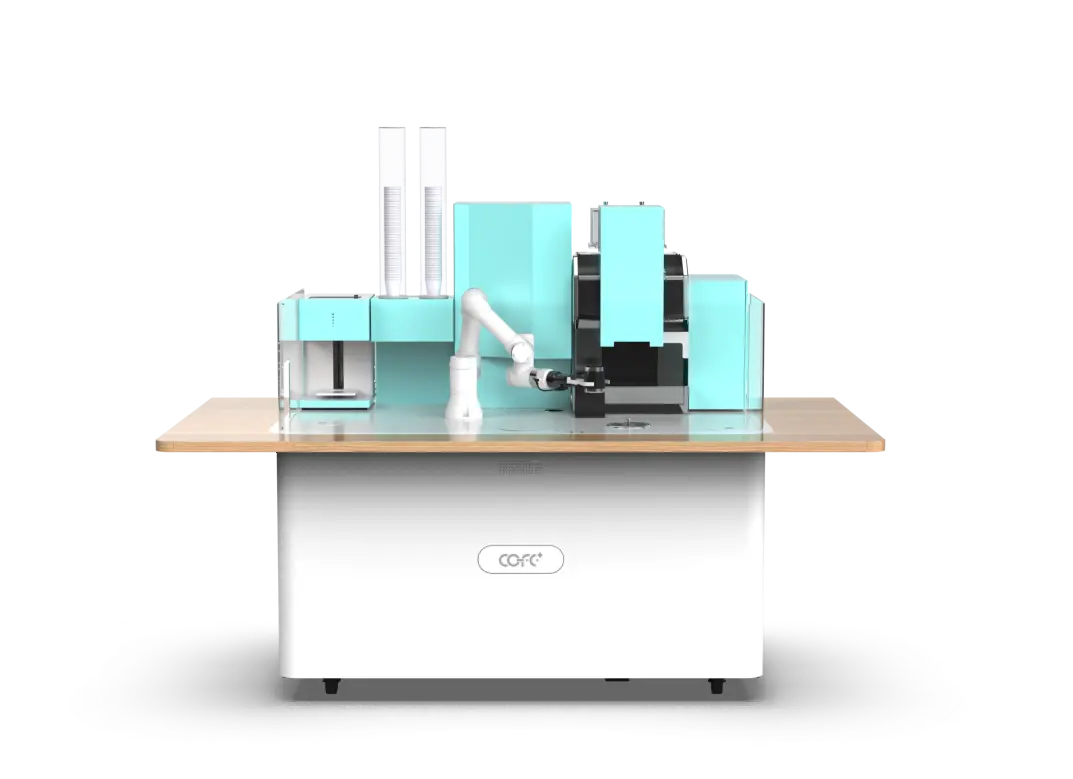
Outdoor public-space operators should be precise about format because indoor robot coffee counters and fold-out robot coffee bars are built for different conditions. A counter or bar may create an attractive coffee moment in a lobby, lounge, or retail interior, but it is not automatically rated for open-air exposure, rain, or freezing nights. The outdoor kiosk is the correct starting point when the unit will face weather, dust, and variable public traffic without permanent staff.
For sheltered but public areas, a closed indoor kiosk may still work if the structure provides stable temperature, power, and drainage. The decision should follow the site’s exposure, not the expected cup price or the shape of the machine.
Site conditions change the specification far more than brochure differences between similar machines. Use the following checks before shortlisting suppliers.
| Site condition | What to confirm | Why it matters |
|---|---|---|
| Direct sun | UV-resistant panels, anti-condensation system, cooling capacity | Reduces touchscreen glare and protects ingredient freshness |
| Rain and wind | IP rating, sealed door edges, enclosed waste system | Prevents water ingress, spills, odors, and pest access |
| Dust or coastal air | Sealed enclosure, filtration, corrosion-resistant interior | Reduces mechanical wear and protects payment and electrical components |
| Freezing temperatures | Freeze protection for water lines and drains | Prevents cracked lines and morning startup failures |
| High heat | Active cooling or ventilation and ingredient temperature monitoring | Keeps milk, syrups, and toppings within safe storage range |
| Variable public traffic | Queue flow, touchscreen visibility, and waste capacity | Avoids bottlenecks and repeated maintenance visits |
A useful technical comparison is not the longest specification list. It is the list tied to public-space operation.
| Area | Useful specification | What to ask |
|---|---|---|
| Throughput | 43 to 60 seconds per cup and about 1,000 cups per day design capacity | Which conditions are assumed and how does the machine behave at peak hour? |
| Menu | 300+ drinks, 197 country recipes, 5,000+ customization combinations | Can the operator localize recipes and lock the menu for easier restocking? |
| Hygiene | Automatic 85°C+ high-temperature sterilization and antimicrobial stainless-steel interior | Which surfaces are cleaned and how often? |
| Remote management | Cloud monitoring for stock, temperature, and system status, with remote diagnostics | Which alerts does the operator see and what is the support response? |
| Compliance | FDA, CE, UKCA, KC, and SASO certification compatibility | Which certificates apply to the destination market and installation site? |
Wait, product data includes those certifications for outdoor kiosk. Good.
Public-space buyers often compare capacity, cost per cup, and payback period as if they guarantee revenue. The evidence discipline is to separate what a figure supports from what it does not.
| Claim or figure | What it supports | Do not infer |
|---|---|---|
| About 1,000 cups per day capacity | Design output under continuous operation with stocked ingredients | Guaranteed daily sales or enough footfall at a specific location |
| About $0.30 to $0.70 cost per cup | Supplier estimate for direct consumable cost under assumed recipes and local prices | Total operating cost including rent, power, water, maintenance, payment fees, and financing |
| ROI in about 6 to 12 months | Supplier estimate based on assumed pricing and sales volume | A contractual payback period or a universal result across public-space locations |
| Operating range from -20°C to 45°C | Ambient design limits for the supplied outdoor kiosk | That no shade, shelter, or power stability measures are needed in extreme weather |
| 10-year design life and 500,000+ cups tested | Supplier durability design and testing statement | Zero consumable replacement, cleaning, or component servicing over that period |
These figures come from the supplier’s product library and remain product descriptions, not a substitute for a site-specific business plan.
Public-space approvals usually require documented utility paths. The operator must confirm the electrical load and whether the site can supply stable power at the required voltage, a potable water connection and shutoff, drainage that will not freeze or create slip hazards, and a wired or cellular network path for payments and cloud monitoring. If the kiosk sits in a park, plaza, or transit area where water and drainage are costly, total installation can exceed the equipment price and should be quoted before comparing machine costs.
A partially sheltered space, such as a covered walkway or a lobby with exterior exposure, is not automatically an outdoor site. The difference matters for warranty and performance assumptions.
A weak request leaves room for a supplier to quote the lowest possible configuration. A stronger request ties the quote to the location.
| Item | What to include |
|---|---|
| Placement | Exact address, orientation, exposure, surrounding clearance, and queue space |
| Environment | Temperature range, humidity, dust, rain, wind, and coastal conditions |
| Power | Voltage, frequency, circuit rating, grounding, and backup power requirements |
| Water and drainage | Water point location, pressure, shutoff access, drain routing, and freeze risk |
| Network | Wired or cellular access, payment data path, and remote monitoring requirements |
| Support | Remote diagnostics, service response, spare parts, and local maintenance plan |
Reject this RFQ line: “We need an all-weather coffee machine for a public space.”
Replace it with: “We require an outdoor-rated robot coffee kiosk with IP54 or equivalent protection, operating from -20°C to 45°C, UV-resistant enclosure, automatic high-temperature sterilization, enclosed waste, cloud monitoring, and remote diagnostics. The site has direct sun, dust, and freezing nights, with power at 110V/220V and the following water and drainage conditions.”
One machine placed in the highest-priority location will reveal more than any supplier comparison.
Send the location’s temperature range, exposure, power and water details, expected foot traffic, and planned operating hours to Shanghai Hi-Dolphin Robot Technology Co., Ltd. at sales@hi-dolphin.com or +86 131 6630 1290. A specific quote should cover the kiosk configuration, destination-market certificates, installation requirements, and local support before you compare payback assumptions.
They do not need a barista, but they still need operations support. An operator must plan for restocking coffee, milk, syrups, cups, and toppings, plus cleaning and preventive maintenance. Remote monitoring reduces unnecessary trips, but it does not eliminate all on-site work.
Site traffic and conversion matter more. A machine with high design output cannot create demand if the location lacks consistent foot traffic or if the queue area is unclear. A pilot should measure actual cups sold per hour, not assume the machine will run at maximum capacity every day.
The direct consumable cost may be about $0.30 to $0.70 per cup, but that is not the full operating cost. Rent, power, water, drainage, payment fees, maintenance, and restocking labor all affect daily economics. An operator should build a location-specific model instead of treating the per-cup figure as the complete cost.
Some outdoor kiosks are designed for a specific operating range, such as -20°C to 45°C, and include IP54-rated protection, UV resistance, anti-condensation, and freeze protection. The buyer still needs to confirm that the selected machine matches the site’s actual temperature extremes, dust exposure, and utility conditions.
TL;DR — COFE+ is a fully automated robotic coffee kiosk that grinds fresh beans, brews espresso and lattes, creates latt……
7th-Genertion Smart Robot Coffee Kiosk Arrives at the Belt and Road Core Hub, Ushering in a New Service Era Along t……
CHICAGO, May 12, 2026 (GLOBE NEWSWIRE) – Shanghai Hi-Dolphin Robot Technology today announced the U.S. debut of its 7th‑……