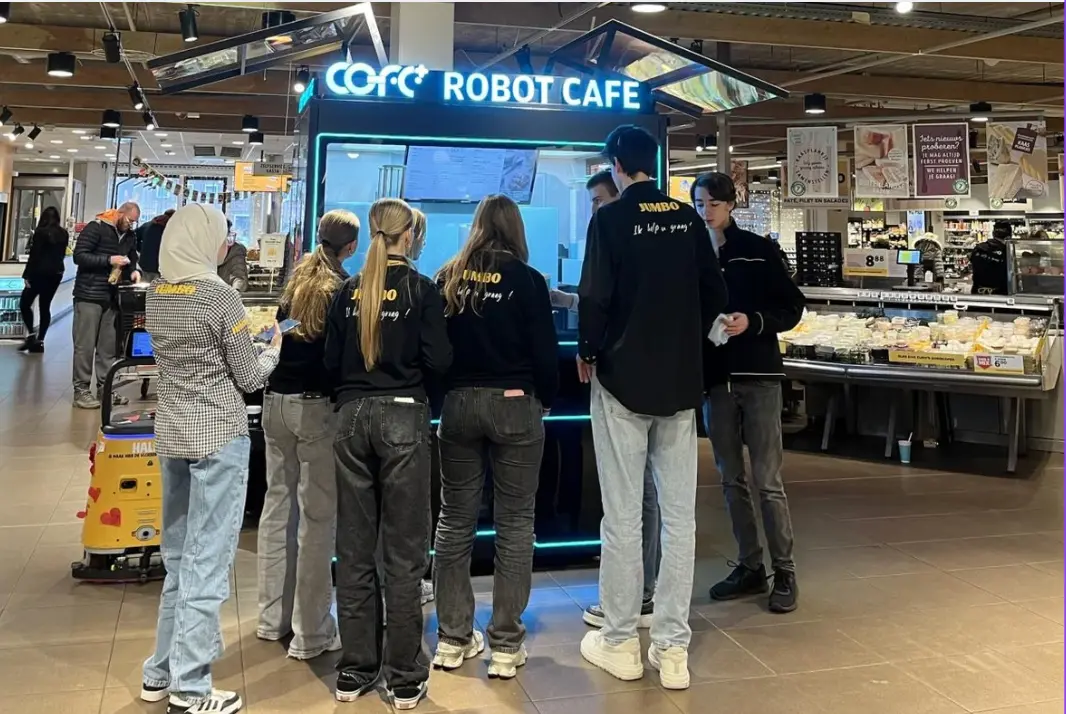
The Rise of Professional Robotic Café Technology: What COFE+ Is and Why It Matters
TL;DR — COFE+ is a fully automated robotic coffee kiosk that grinds fresh beans, brews espresso and lattes, creates latt……

The automated coffee kiosk market has matured faster than most operators expected. What started as a novelty in airports and tech campuses now handles serious volume in office buildings, transit stations, and hotel lobbies across dozens of countries. Mini robot coffee shops sit at the center of this shift—compact enough to fit where traditional cafés cannot, yet capable of producing specialty drinks that hold up against staffed competitors.
This piece covers what these systems actually deliver in daily operation, where the technology stands today, and how deployment decisions affect long-term returns.
Automated coffee machines are not new. What distinguishes the current generation of mini robot coffee shops is the combination of footprint, drink complexity, and operational autonomy. A 2.35 m² unit can now produce over 300 drink variations with 5,000+ customization options—numbers that would have required a full café buildout five years ago.
The shift reflects a broader move toward micro-retail coffee models. Operators no longer need to choose between quality and convenience; the equipment handles both. A robotic arm executes latte art. AI manages extraction timing. IoT connectivity feeds real-time data to a central dashboard. The result is a consistent product at scale, without the staffing overhead that makes traditional café expansion difficult.
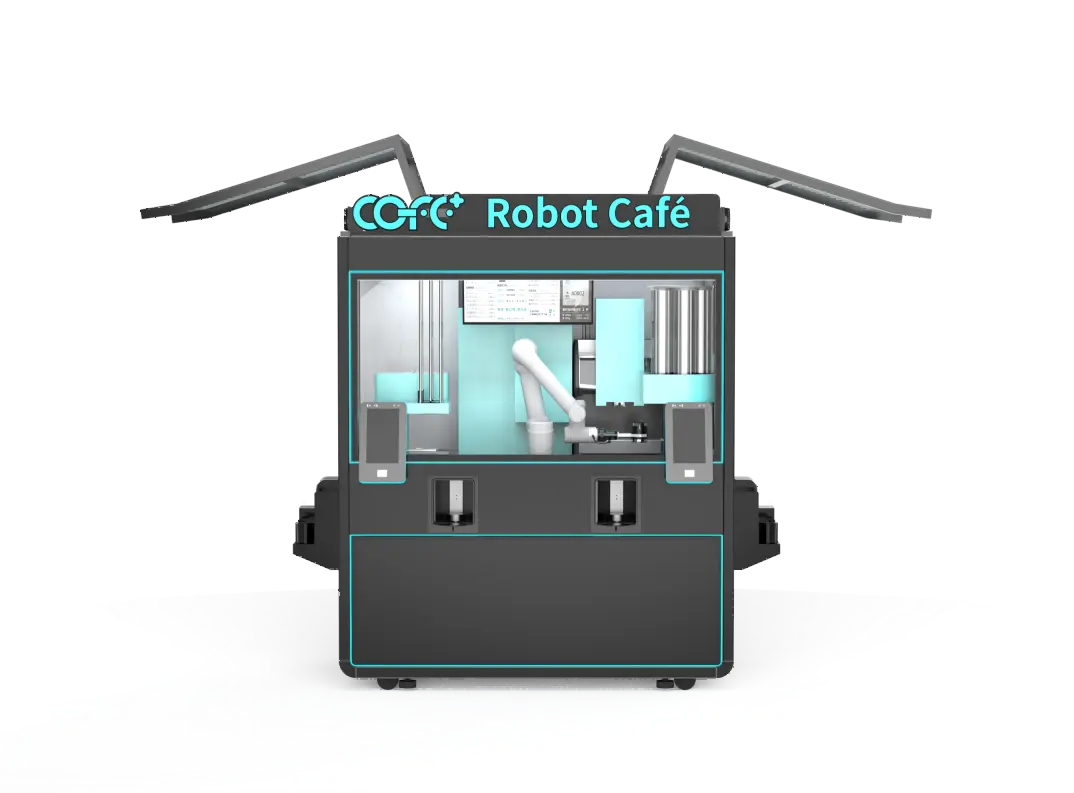
The financial case for mini robot coffee shops rests on three factors: labor elimination, rent reduction, and throughput consistency.
Traditional cafés carry labor costs that typically consume 25–35% of revenue. Automated systems eliminate that line item entirely. Rent savings follow from the footprint difference—a 2 m² kiosk can occupy space that would never support a staffed location. The COFE+ 7th Generation Smart Coffee Robot Kiosk, for instance, consistently delivers over 1,000 cups per day in real-world deployments, a volume that would require multiple baristas in a conventional setup.
| Feature | COFE+ 7th Gen Smart Coffee Robot Kiosk (Indoor) | COFE+ 7th Gen Robot Coffee Bar |
|---|---|---|
| Footprint | 2.35 m² | 2 m² (folded) |
| Speed per Cup | 43–60 seconds | Varies by drink complexity |
| Menu Capacity | 300+ drinks, 5,000+ customizations | 350+ drinks, 5,000+ customizations |
| Latte Art | 3D photo/logo, robotic arm | 3D photo/logo, robotic arm |
| Staff Requirement | None | None |
| Typical ROI | 6–12 months | 6–12 months |
Cost per cup typically falls between $0.30 and $0.70, depending on ingredient sourcing and drink complexity. That margin structure supports competitive pricing while maintaining profitability—a combination that staffed operations struggle to match in high-rent locations.
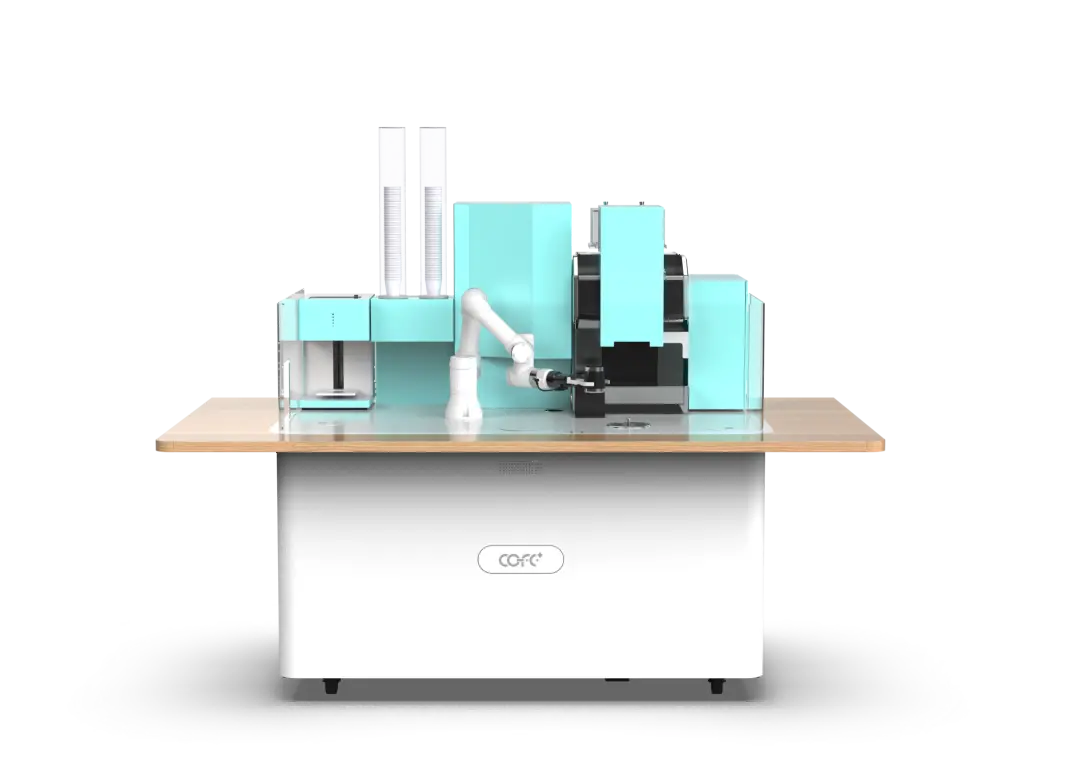
The functionality of these systems depends on tight integration between AI, IoT, and mechanical automation. AI algorithms manage the drink preparation sequence—grinding, extraction, milk texturing, pour timing—with precision that eliminates the variability inherent in manual preparation. Each cup follows the same parameters, regardless of time of day or operator fatigue.
IoT connectivity links each unit to a cloud platform for real-time monitoring. Operators can track inventory levels, review diagnostic alerts, and pull sales data from multiple locations through a single dashboard. When a grinder shows wear patterns or milk inventory drops below threshold, the system flags it before service interruption occurs.
Payment processing runs through secure channels, and the communication architecture supports continuous operation even during network interruptions—transactions queue locally and sync when connectivity returns.
A robot barista handles considerably more than basic espresso. Current systems produce the full range of espresso-based drinks—lattes, cappuccinos, flat whites, macchiatos—alongside milk tea, matcha, hot chocolate, and iced variations. If your deployment serves a market that expects specialty options, the equipment accommodates that without additional complexity.
The 3D latte art capability deserves specific mention. Units can print photos, logos, or custom designs directly onto the drink surface using food-grade ink. For branded deployments or locations where visual presentation matters, this feature adds a differentiation layer that basic machines cannot match.
Unattended food service raises legitimate questions about hygiene and regulatory compliance. The design approach addresses these concerns through multiple layers.
Outdoor kiosks feature fully enclosed waste systems that prevent spills and pest access. Interior surfaces use anti-microbial stainless steel. Automatic sterilization cycles run at 85°C+ to maintain sanitary conditions between service periods. These are not optional add-ons—they are built into the operational protocol.
Certification coverage matters for international deployment. Current units hold FDA, CE, UKCA, KC, and SASO certifications across more than 18 developed countries. If your expansion plans include regulated markets, the compliance groundwork is already in place.
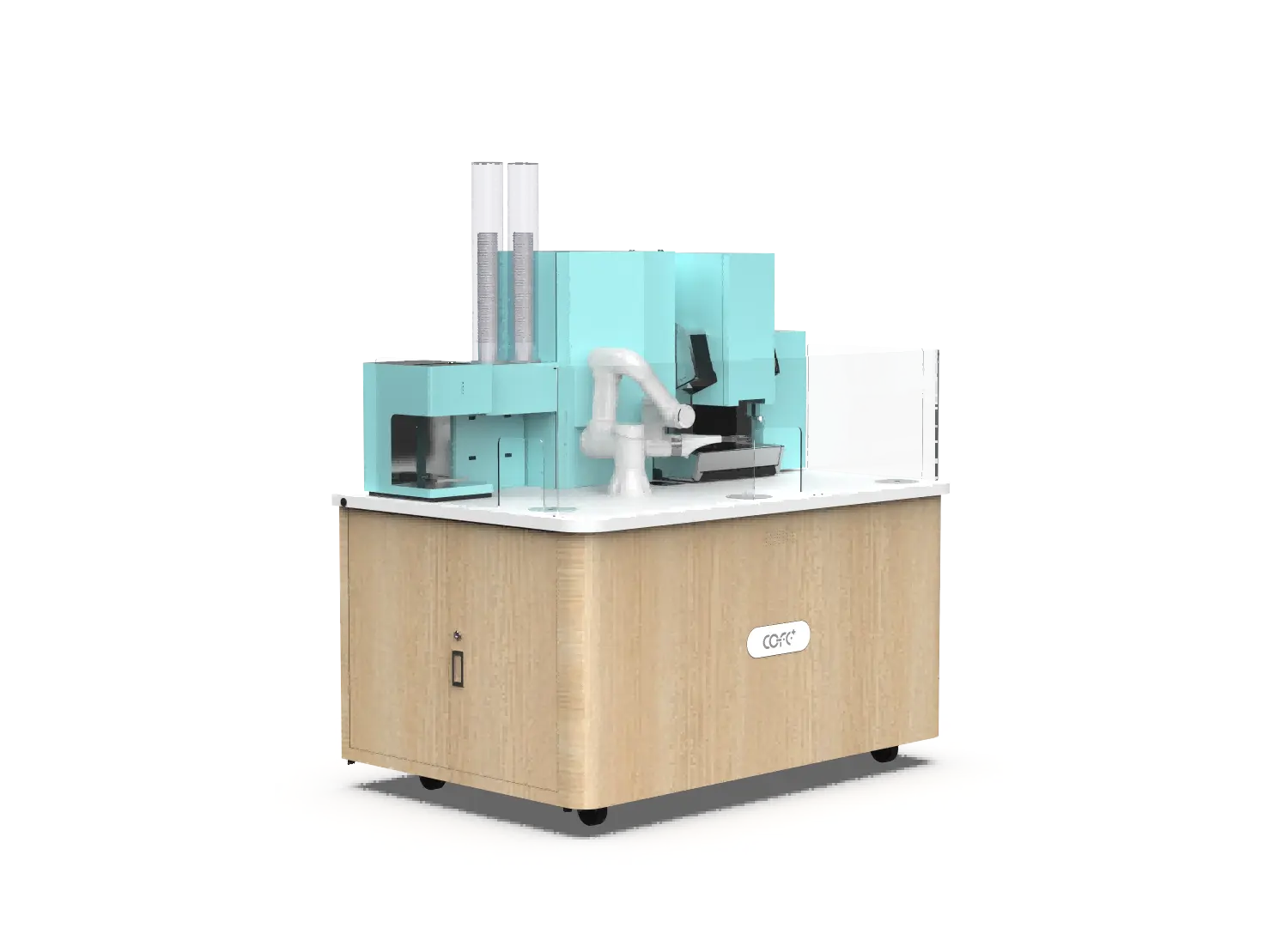
The compact footprint of mini robot coffee shops opens locations that traditional cafés cannot serve profitably. Office lobbies generate consistent weekday traffic without the rent burden of street-level retail. Transportation hubs capture high-volume, time-sensitive customers. Hotels can offer 24-hour coffee service without staffing overnight shifts. Retail stores can add a coffee amenity without dedicating floor space to a full café buildout.
Scalability follows naturally from the operational model. Adding a second or tenth location does not require hiring and training additional staff—it requires installing additional equipment and connecting it to the existing management platform. The complexity that typically limits café expansion disappears.
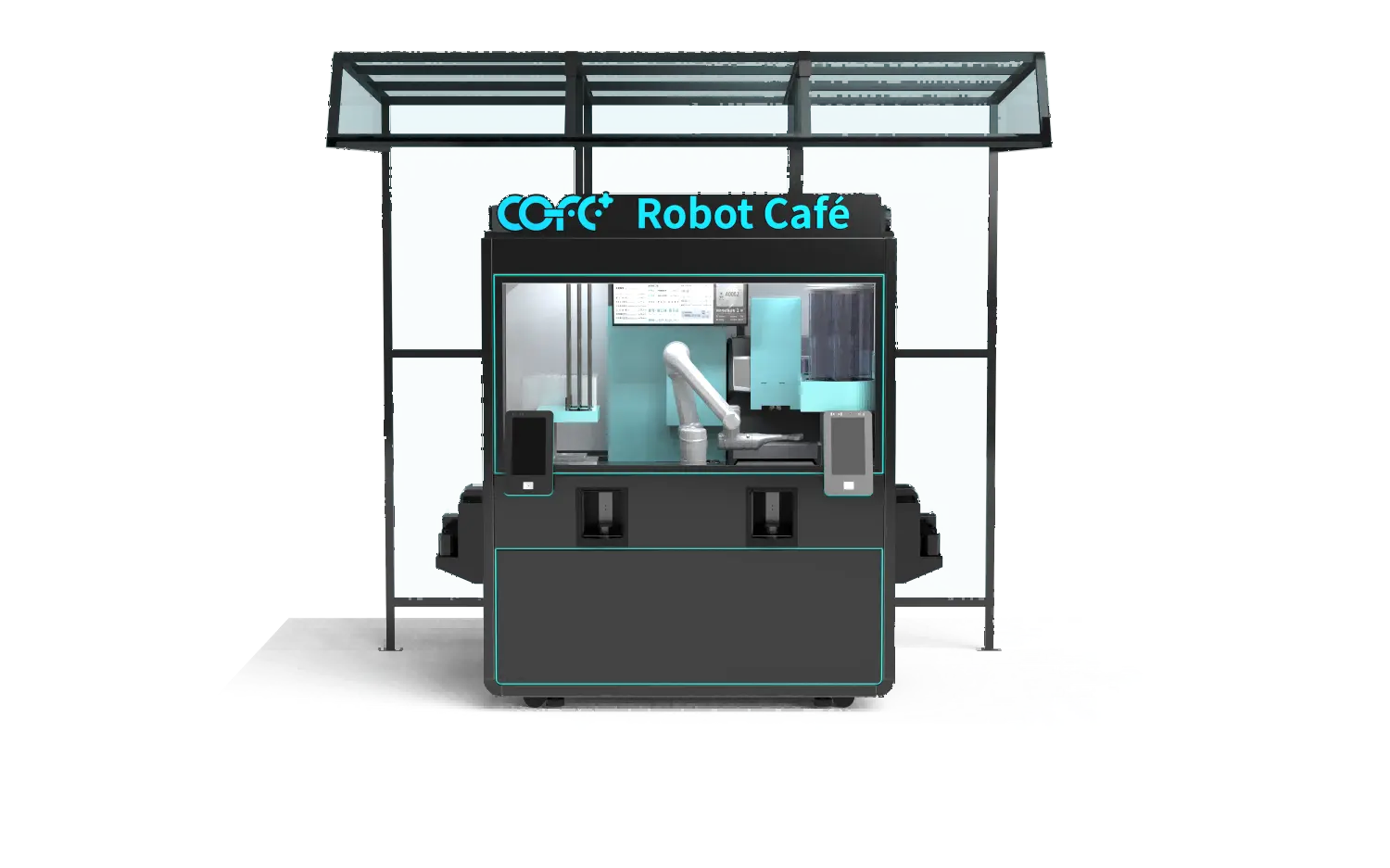
If your situation involves high-traffic locations with space constraints, it is worth discussing footprint requirements and traffic projections before committing to a deployment model.
How reliable are robot coffee machines for continuous operation?
These machines are engineered for 24/7 service in high-traffic environments. Self-diagnostic systems monitor component wear, extraction consistency, and inventory levels continuously. When something drifts outside acceptable parameters, the system alerts operators before it affects service. Remote monitoring allows technicians to diagnose issues without site visits in many cases. Scheduled maintenance intervals are typically measured in weeks rather than days, and most routine tasks can be handled by non-specialist staff following guided procedures.
Can these compact robot coffee shops be customized for branding?
Customization options cover exterior panels, digital interface themes, menu presentation, and drink naming. If brand consistency matters for your deployment—and it usually does—the equipment adapts to your visual identity rather than imposing a generic look. Some operators use the interface screens for promotional content between transactions, turning the kiosk into both a service point and a brand touchpoint.
What are the power and connectivity requirements for a mini robot café?
Standard electrical service handles most installations—specific amperage requirements vary by model but fall within typical commercial ranges. Internet connectivity supports remote management, payment processing, and data synchronization. The systems are designed for straightforward integration into existing infrastructure, though site surveys before installation help identify any location-specific considerations. To discuss specific requirements for your deployment, contact us at sales@hi-dolphin.com or +86 131 6630 1290.
TL;DR — COFE+ is a fully automated robotic coffee kiosk that grinds fresh beans, brews espresso and lattes, creates latt……
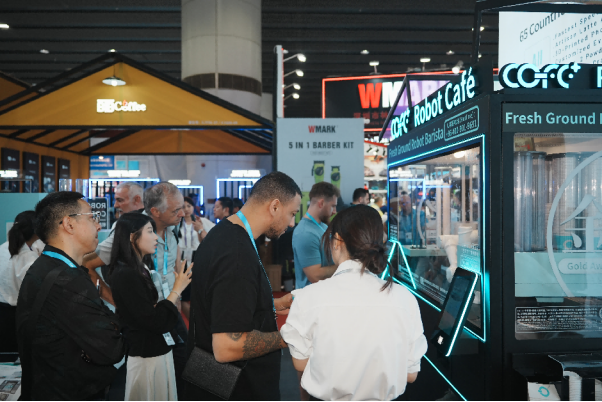
7th-Genertion Smart Robot Coffee Kiosk Arrives at the Belt and Road Core Hub, Ushering in a New Service Era Along t……
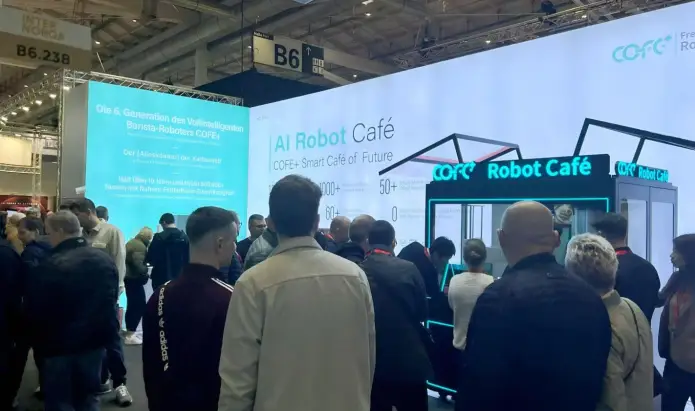
CHICAGO, May 12, 2026 (GLOBE NEWSWIRE) – Shanghai Hi-Dolphin Robot Technology today announced the U.S. debut of its 7th‑……