
International operations turn spare parts planning from a routine replenishment task into a real supply chain discipline. A robot coffee kiosk in Singapore and another in Riyadh may share the same core modules, but they face different humidity levels, voltage standards, certification requirements, and customs timelines. Operators who plan around module criticality, local service capacity, and remote diagnostics data keep machines serving customers instead of waiting for couriers.
Why Spare Parts Planning Is Different Across Borders
Compliance is not a single global checklist. Food-contact materials, electrical safety, and data-handling rules differ by market, so a parts plan must track both machine certification and replacement-part documentation. Food safety management principles require operators to control cleaning, maintenance, and replacement of product-contact components [1]. The Codex General Principles of Food Hygiene reinforce that spare parts in contact with beverages must not create contamination risk [2]. In the European Union, materials intended to contact food must meet Regulation (EC) No 1935/2004 requirements [3].
The mechanical component may be the same across markets, but the accepted paperwork and marking path can differ. A COFE+ kiosk platform can carry FDA, CE, UKCA, KC, and SASO certification depending on configuration. International operators should therefore keep one certified parts list per market and treat import documentation as part of the stocking decision.
Map the Failure Points Before Buying Inventory
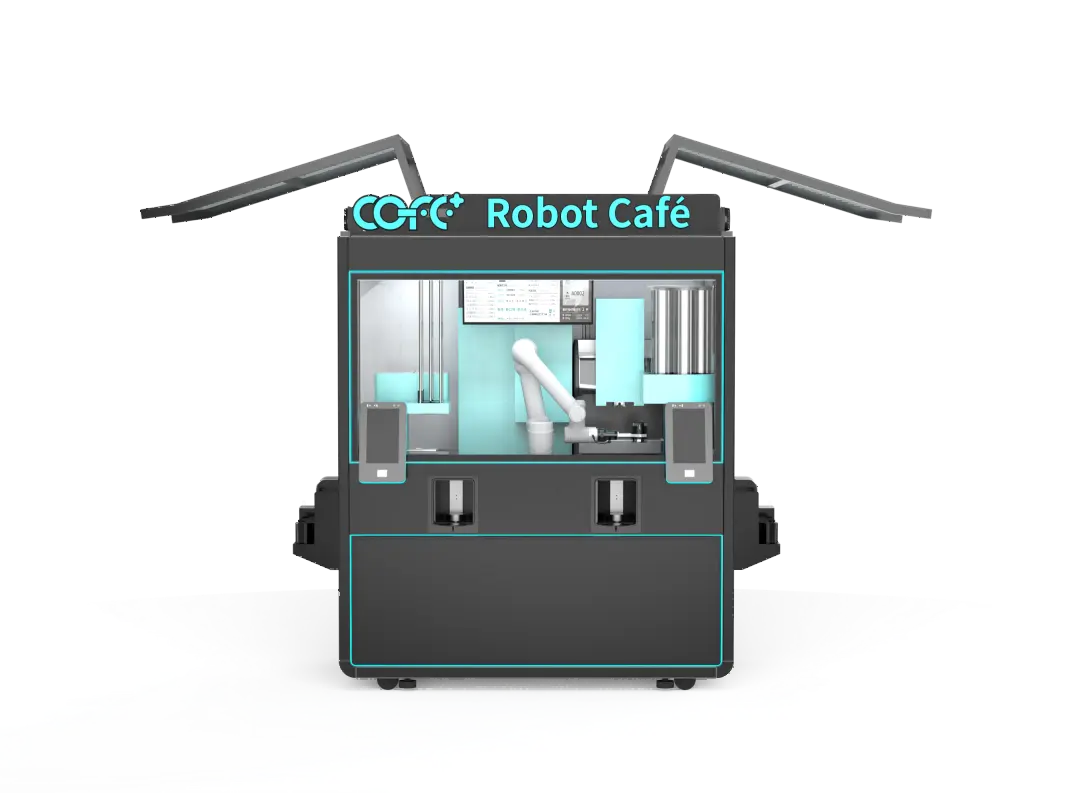
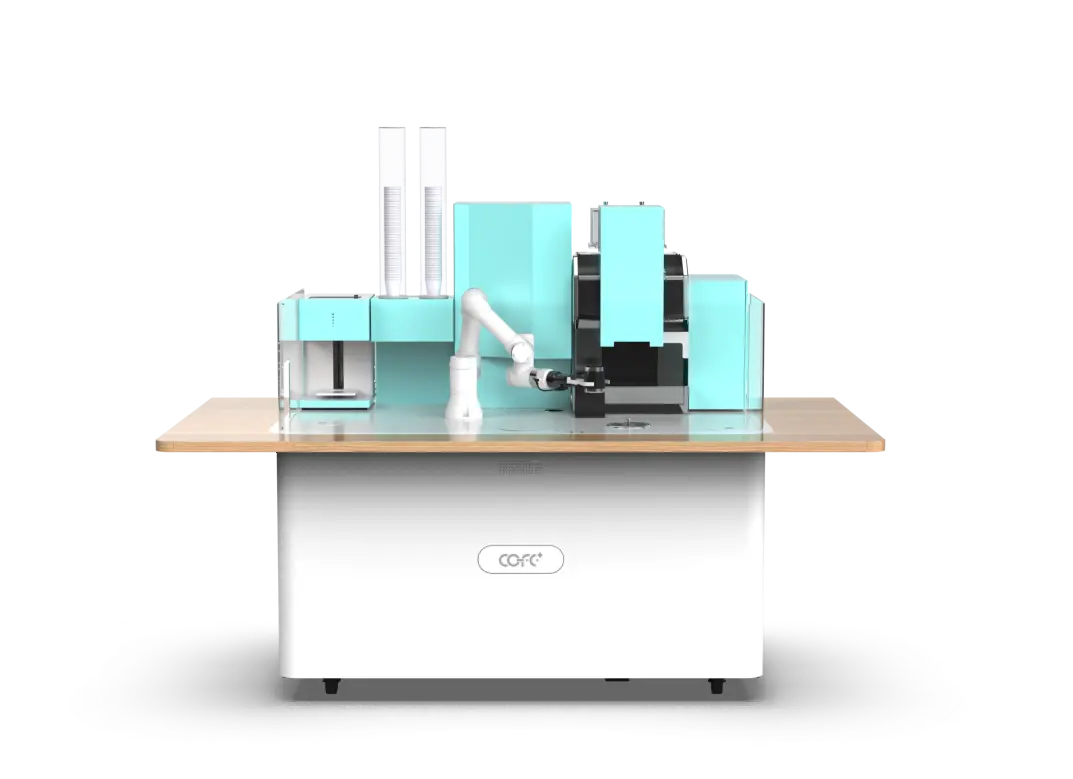
Start with the kiosk’s modules rather than a generic parts list. For a COFE+ 7th-generation kiosk, the main serviceable blocks include the bean grinder and extraction unit, milk and syrup dispensing path, cup handling and lid system, water and filtration loop, heating and refrigeration, robotic arm or 3D printing system where installed, payment and display, and connectivity controller.
| Module | Spare parts to stock | Planning note |
|---|---|---|
| Coffee extraction | Group gaskets, grinder burrs, brew filters, cleaning tablets | Consumable-driven; replace on schedule |
| Milk and syrup | Food-grade tubing, pinch valves, connectors, seals | High-clean priority [2] |
| Water system | Filter cartridges, UV lamp, flow sensors | Track water quality and meter cycles |
| Thermal | Heating elements, temperature probes, thermal fuses | Voltage-specific; keep correct 110V/220V variant |
| Cup handling | Belts, suction cups, sensors | Wear items for high cup volume |
| Payment and display | Touch panel assembly, card reader, backup display | Swap as sealed units |
| Connectivity | Router, IoT gateway, antenna, power supply | Keep remote access alive |
| Robotic arm and printing | Arm joints, print heads, air filters | Schedule supplier-supported service |
Electrical replacement kits should match the original control design. IEC 60204-1 sets general safety requirements for electrical equipment of machines [4].
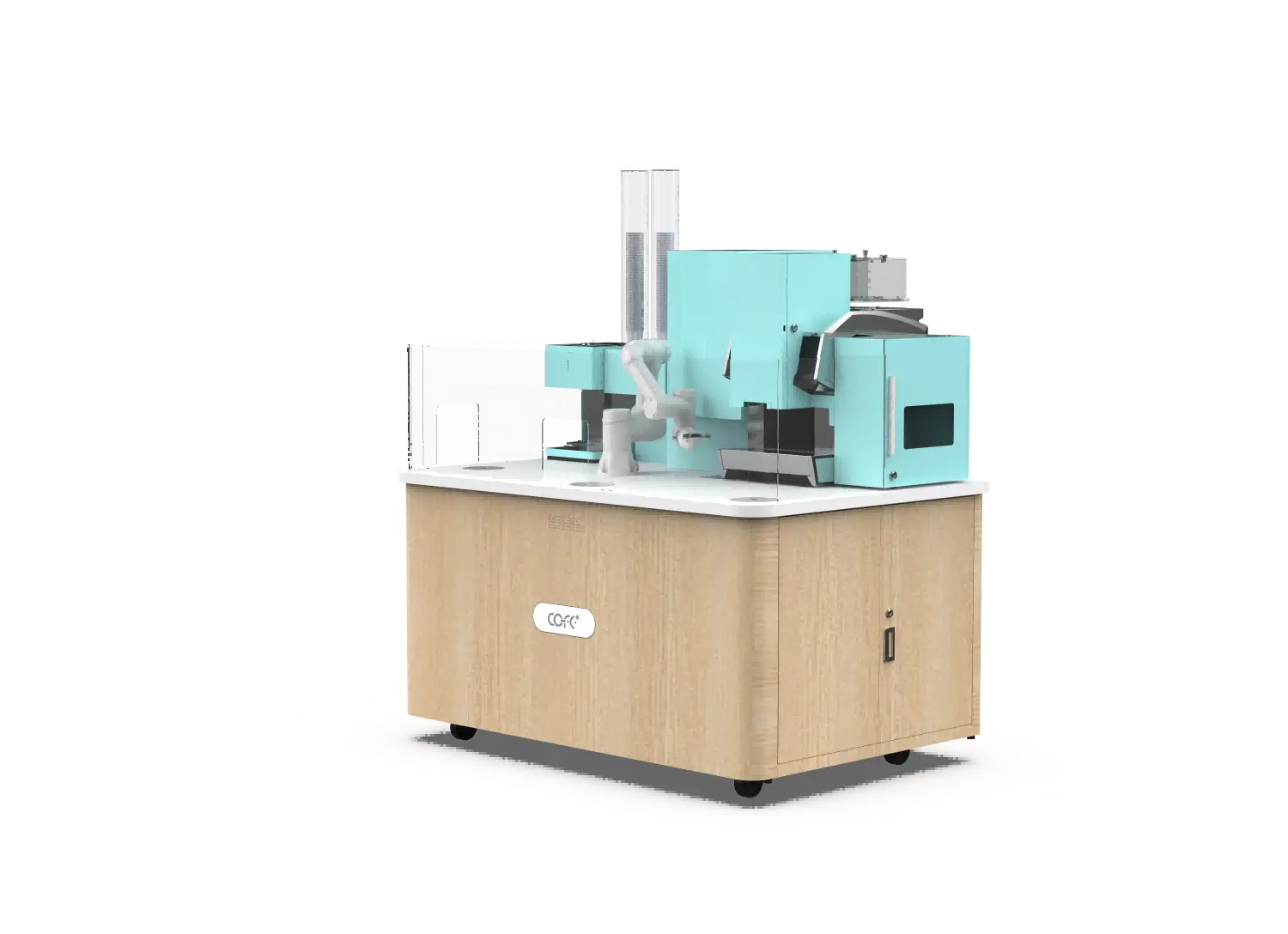
For indoor placements, the spare parts focus shifts toward extraction, milk, and drink-path consumables. <robot coffee kiosk indoor> covers indoor kiosk configuration and operation details.
Stock by Risk, Not by Guesswork
A useful method is to classify parts into A, B, and C groups. A parts are service-stopping and hard to source. B parts degrade gradually and can wait until the next scheduled maintenance visit. C parts are standard fittings, fasteners, and consumables available locally. Risk management guidelines provide a structured way to balance failure likelihood against business impact [5].
The goal is not maximum stock. It is the right stock at the right layer of the network. Site-level stock should carry fast-moving consumables. Regional hubs should hold module-level replacements with long lead times. Central supply can keep rare, high-value assemblies.
Regional Warehousing and Customs Planning
International operators should stage parts where local service teams can reach them in one ground trip. A regional hub can hold module-level spares, while each site keeps daily consumables. This reduces both downtime and cross-border emergency shipping.
For customs, keep the document set complete: commercial invoice, packing list, certificate of origin, and any food-contact declaration required by the destination market. Pre-cleared kits and a local distributor can reduce inspection delay and demurrage. Spare parts that ship with the same certification logic as the original kiosk generally move faster through import review.
Spare parts planning should be part of the initial rollout, not an afterthought. For module-level parts lists, lead-time data, and regional stocking recommendations, contact Shanghai Hi-Dolphin Robot Technology at sales@hi-dolphin.com or +86 131 6630 1290.
Use Remote Diagnostics as the First Line of Defense
Remote diagnostics changes what operators need to stock. When the kiosk reports which module is degrading, the service team can replace the right part before a cascade failure. The smart store brain monitors stock, temperature, and module status, and can alert operators to issues ranging from ingredient shortage to module failure.
Remote alerts reduce unnecessary site visits and help operators distinguish a software issue from a mechanical fault. <smart store brain> covers cloud monitoring, module health tracking, and remote diagnosis for robot coffee kiosks.
Payment and service data must be protected. IEC 62443 provides security guidance for industrial automation and control systems, including the connected devices and gateways that keep kiosks online [6].
Build a Local Technician Network
One well-trained local technician can replace many parts without waiting for an overseas engineer. Operators should create a certification path for local service partners, covering mechanical replacement, electrical isolation, food-contact handling, and safe testing after repair.
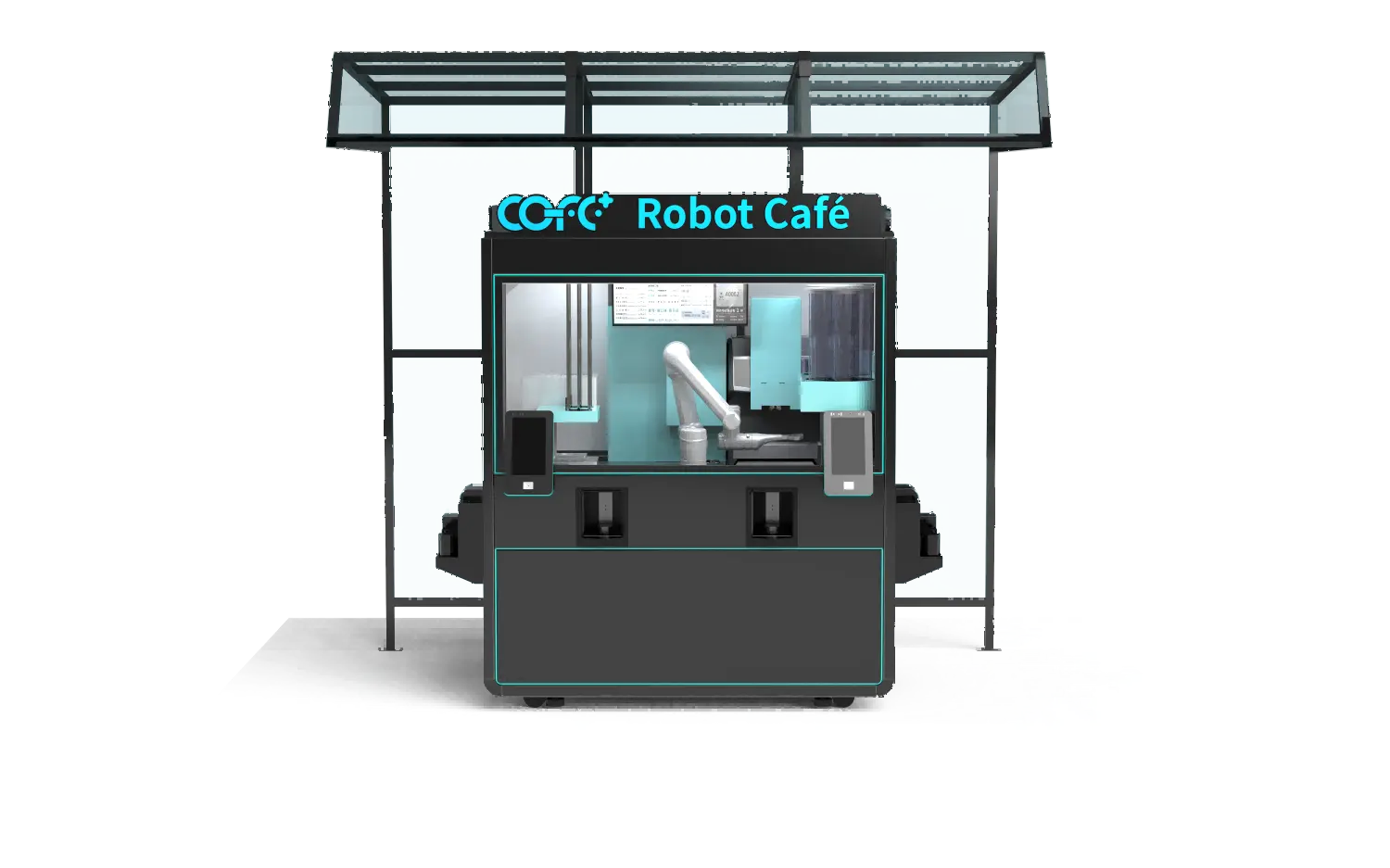
Indoor and outdoor kiosks may share many spare parts, but outdoor enclosures put extra stress on seals, ventilation, and UV-exposed components. <robot coffee kiosk outdoor> covers all-weather outdoor operation details for service planning.
A shared local parts pool across several operators can improve availability while keeping individual capital cost lower. The key is standardized parts identification, so a technician in any market can confirm the exact revision before installation.
What to Require from the Supplier Agreement
Before finalizing a cross-border deployment, operators should confirm warranty and spare parts terms in writing. Important points include:
- Lead time for critical modules in each region
- Availability of exchange units while a module is repaired
- Remote diagnostic reports and error-code documentation
- Warranty claim handling across borders
- Shelf life and storage conditions for food-contact parts
- Installation and training support for new local service partners
A clear service-level agreement reduces ambiguity when a kiosk is down at 2:00 a.m. in another time zone.
Plan the Parts Pipeline Before You Scale
International spare parts success is a planning function, not an emergency response function. Operators who map modules, classify risk, stage inventory regionally, and use remote diagnostics spend less time reacting and more time serving.
To request a certified spare parts list, lead-time matrix, and stocking model for your operating markets, contact Shanghai Hi-Dolphin Robot Technology Co., Ltd. at sales@hi-dolphin.com or +86 131 6630 1290.
Frequently Asked Questions
How many spare parts should an operator keep per kiosk?
Start with consumables for the next replenishment cycle plus a transit buffer. For service-stopping modules, hold at least one exchange unit per regional service hub rather than one per kiosk. The optimal level depends on replenishment lead time, failure impact, and remote diagnostics coverage [5].
Which spare parts fail most often in a robot coffee kiosk?
High-contact and high-cycle items are the most common replacements: water filters, milk tubing, pinch valves, seals, cup-handling belts, and grinder burrs. They are usually low-cost but critical to drink quality and hygiene [2].
How do customs and certification affect spare parts lead time?
Spare parts clear faster when they ship with the correct certification documents and a clear commercial invoice. Operators should pre-clear high-value modules and keep food-contact declarations on file. Local import rules may require additional marking or documentation [3].
Do indoor and outdoor kiosks need different spare parts strategies?
The core modules are often shared, but the environment changes the emphasis. Outdoor kiosks need more attention to enclosure seals, ventilation filters, UV-sensitive panels, and condensation protection. Indoor kiosks are usually dominated by ingredient-handling and drink-path consumables.
Can remote monitoring reduce total spare parts cost?
Yes. When the kiosk identifies a degrading module, operators replace the right part before a cascade failure and avoid swapping healthy parts. A secured remote link aligned with recognized control-system security guidance protects both service data and payment integrity [6].
References
[1] ISO 22000:2018, Food safety management systems — Requirements for any organization in the food chain, International Organization for Standardization, Geneva, 2018.
[2] Codex Alimentarius Commission, General Principles of Food Hygiene, CXC 1-1969, Rev. 2022, FAO/WHO, Rome, 2022.
[3] European Parliament and Council Regulation (EC) No 1935/2004 of 27 October 2004 on materials and articles intended to come into contact with food, Official Journal of the European Union, L 338, 2004.
[4] IEC 60204-1:2016, Safety of machinery — Electrical equipment of machines — Part 1: General requirements, International Electrotechnical Commission, Geneva, 2016.
[5] ISO 31000:2018, Risk management — Guidelines, International Organization for Standardization, Geneva, 2018.
[6] IEC 62443 (all parts), Security for industrial automation and control systems, International Electrotechnical Commission, Geneva.